Yamaha SB-5A Model Solid Body Electric Bass Guitar (1968), made in Japan, serial # 6494, sunburst polyester finish, hardwood body, maple neck with rosewood fingerboard, black hard shell case.
This Yamaha SB-5A is one of this venerable Japanese company's better remembered 1960s instruments, the bass end of the fancifully styled late '60s SG solidbody series. These distinctive and super flashy instruments were by any standard the finest electric guitars and basses made in Japan up to that point. The design is highly original and somewhat eccentric but solidly engineered and built to a higher quality standard than other period Japanese electrics. Yamaha was a highly diversified company but their products manifested a commitment to quality and the highest grade workmanship.
Yamaha launched the "SG" solid electric line in 1966 having recently made inroads in the global acoustic guitar market. The range was distinguished by visually striking asymmetrical bodies with smooth yet angular lines that still remain unique. The higher end models rather look as if they had been originally designed the other way round and at the last minute flipped over, unofficially called the "Flying Samurai" and other less polite names! The elongated sculpted horn on the treble cutaway side balances a large offset body curve at the other end, both of which would make more visual (and ergonomic) sense the other way round! The dynamic but oddball look is enhanced by a very long thin headstock reminiscent of a hockey stick and/or samurai sword; strikingly modern for 1966; it would not look out of place on a 1990s instrument!
The SB-5A was the "SG" series pro quality twin-pickup electric bass. These were not primarily intended for export but aimed at Japan's domestic market, then in an electric guitar frenzy exceeding even the US. Many Japanese instrumental bands were heavily inspired by the Ventures so the SB-5A inherited some Mosrite-esqe elements, particularly a slim neck with a zero fret and the serial number stamped in the fingerboard exactly as Semie did it in California! One fairly unique feature of this bass is a medium 31 1/2" scale, which sits in between Fender's standard 34" and the traditional 30" short scale. This makes for a very comfortable player but with a bit more definition than many short-scale basses.
The pickup placement down by the neck with the distinctive skewed angle was a nod to Mosrite as well. On the SB-5A this is mated to a conventionally angled bridge pickup; these are punchy single coils making the bass is brighter-toned than similar American instruments. The controls are interesting; there is no switch, the pickups have a master volume and tone knobs and a very effective blend knob marked "Balancer" that offers easy mixing of the two units.
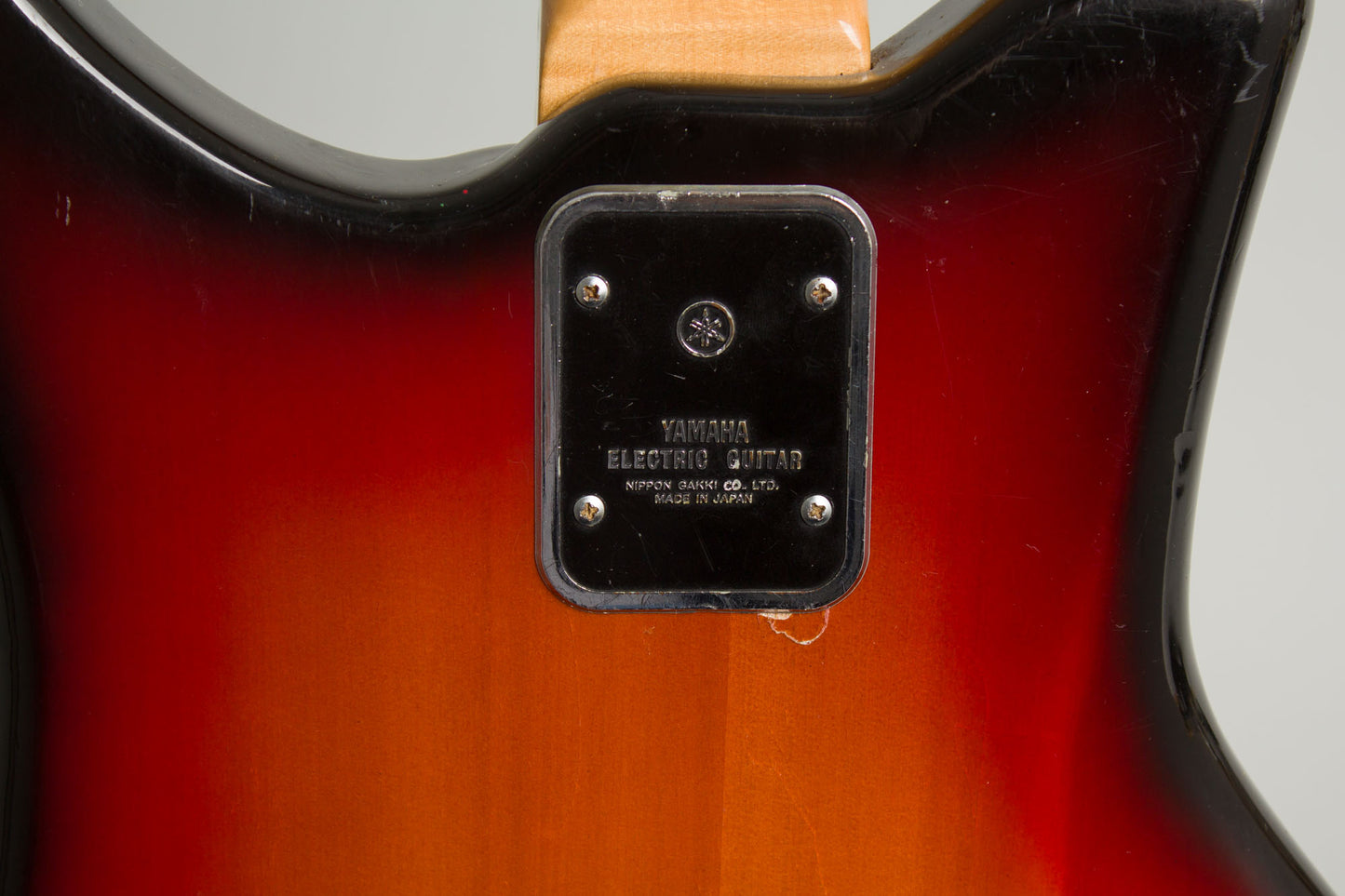
The 20-fret maple neck has a bound, dot inlaid rosewood fingerboard and is bolted on with an extended tenon design again borrowed from Mosrite. The truss-rod access point is hidden under a the plate on the back of the body like an English-made Burns. The tuners on the long sloping headstock are individual Japanese machines also loosely copied from the plastic-button Van Gents used by Burns. A block Yamaha logo decal is on the headstock while the company's tuning fork logo is applied to the end of the headstock on a small plastic disc.
The SB-5A and its siblings were never officially sold in the US market, so this is a fairly rare find here. The entire original Yamaha SG line was discontinued by 1971, replaced by a line of well-crafted but far more conventional-looking guitars with none of its exuberant style. Despite an eccentric look this is a well-made instrument, at least equal to many European and even some American basses of the era. This is a nice example, an excellent player and certainly one of the most distinctive basses of the 1960s visually at least!
Overall length is 45 3/4 in. (116.2 cm.), 14 in. (35.6 cm.) wide at lower bout, and 1 1/2 in. (3.8 cm.) in depth, measured at side of rim. Scale length is 31 1/2 in. (800 mm.). Width of nut is 1 5/8 in. (41 mm.).
This is a very good player showing some general wear but no major damage. The body finish has chips, scratches and dings, most heavily to the back . The back of the neck is softly worn to the wood in the center and is very comfortable to play. Structurally the instrument is excellent, with a few minor cosmetic issues. At some point someone removed the neck and chipped the wood by some of the screws; one small glued-back piece is visible off the bottom end of the plastic neckplate. The long headstock has a name amateurishly engraved into it; this has been filled in with color but is still visible.
The bass is original and complete except the bridge covers (a chrome stamped piece on top and odd plastic block on the back) and mute assembly are long gone, a common situation with these. The original bridge looks to have been moved slightly long ago; it appears to have been slightly out of position as built (even Yamaha wasn't perfect in the '60s!). This is a very easy playing bass with a surprisingly aggressive sound, really fun to play and certainly visually striking! It lives in a modern hardshell bass case. Overall Very Good + Condition.