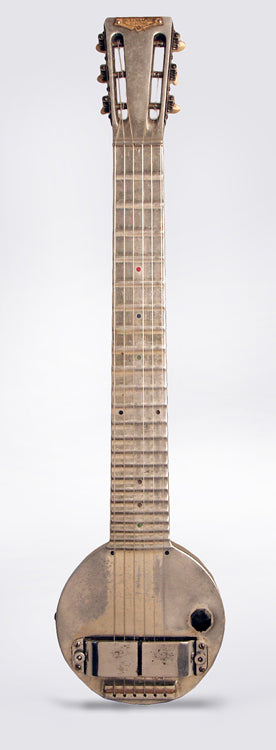
Rickenbacker Model A-22 Model Lap Steel Electric Guitar, c. 1934, made in Los Angeles, gold enamel finish, cast aluminum body.
The Rickenbacher A-22 Electro Hawaiian Guitar, nicknamed the "Frying Pan", is simply one of the most historically important 20th century guitars extant. This is the first commercially successful electrified string instrument as well as the first solid body guitar. This instrument saw the initial use of the celebrated pre-war 1 1/2 inch horseshoe magnet pickup, the first electro-magnetic pickup to be perfected and still one of the greatest-sounding units ever. While the very first Electros have no onboard controls, this example has a single volume pot with an octagonal knob on the treble side. The fingerboard is integral with the neck and has raised ridges for frets and green, red, blue and black inlayed dot markers. The entire instrument is fabricated in one piece of cast aluminum with the strings thru body, with separate chromed metal nut and saddle.
The slotted headstock has 1920's style quality open gear strip tuners with grained ivoroid buttons, as seen on many 1920's Martin and Gibson guitars. A gold metal name plate mounted there is reads "Richenbacher Electro, Los Angeles" with "RE" between mirrored lightning bolts. The serial number is 1139, making this one of the first few hundred electric guitars ever built. Although the A-22 was marketed and usually used as a Hawaiian guitar, the neck is round and with a different set-up this instrument could also have been played Spanish style - something designer George Beauchamp alludes to in the patent application. This example is perfectly playable, and still sounds fantastic.
Overall length is 28 3/4 in. (73 cm.), 7 in. (17.8 cm.) width, and 1 5/8 in. (4.1 cm.) in depth, measured at side of rim. Scale length is 22 1/4 in. (565 mm.). Width of nut is 2 in. (51 mm.). Heavily played but not abused, with some significant loss to the gold enamel finish on the body and some wear-through to the chrome on the pickup magnets. The saddle is wooden which is unusual (it is generally metal) but it appears very old. All else appears original-there are a couple of filled tuner holes in the headstock sides from what appears to have been an attempt to mount the strips in reverse, but the original 20's style strip tuners are intact. A good example still fit for use! Very Good + Condition.