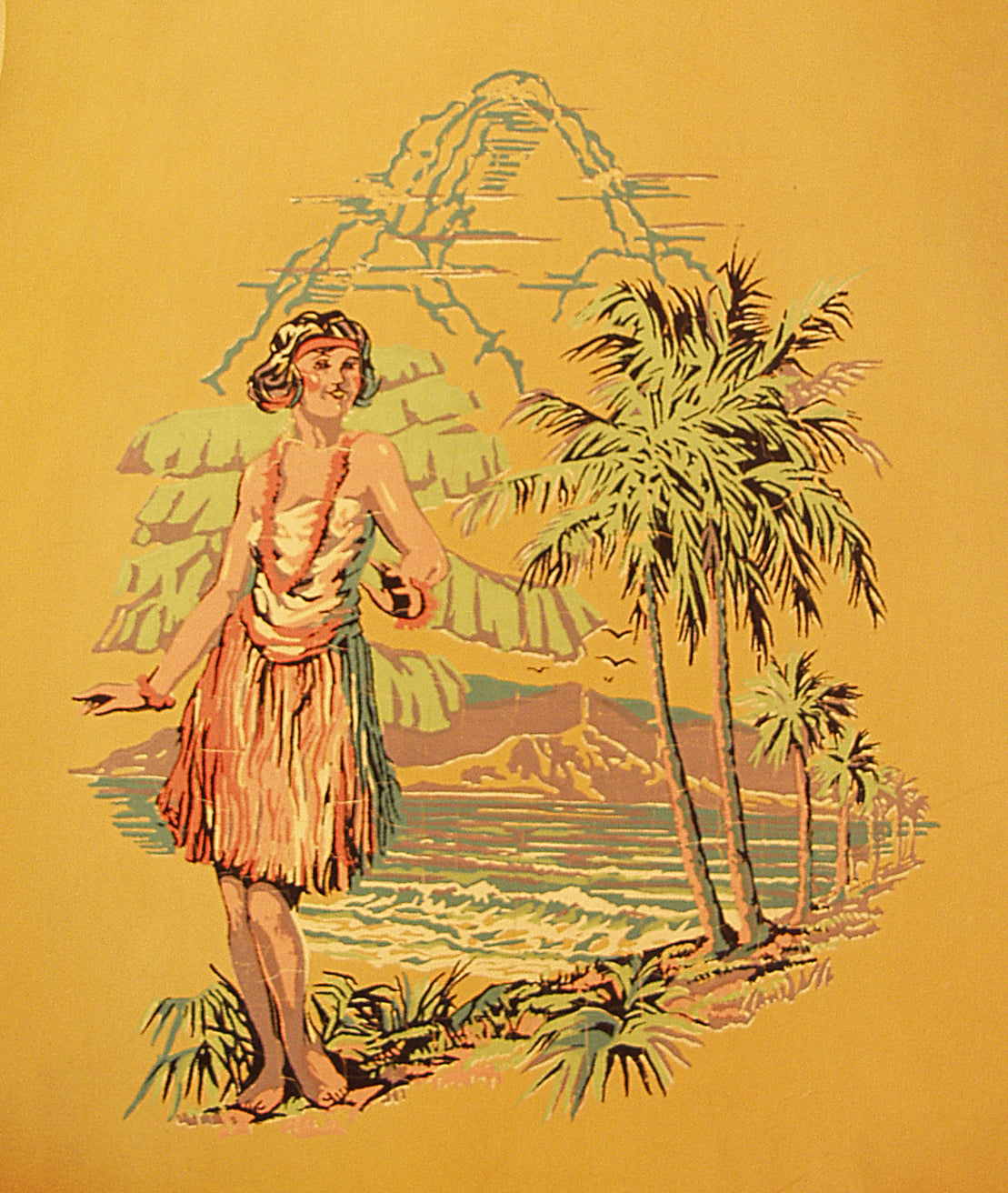
National Triolian Model Resophonic Guitar (1929), made in Los Angeles, Polychrome lacquer with decals finish, laminated wood body, basswood neck, original black hard shell case.
This extremely rare guitar is from the first series of single-cone National reso-phonic guitars to have been made, designed just before the Great Depression made lower-priced instruments a necessity. The wooden-body version of Triolian was only available for only a very brief period, introduced in late 1928 and discontinued in the last quarter 1929. National had tried a triple-cone version of this wood-body instrument (hence the name "Triolian") but quickly found the concept of a budget tricone unworkable. The single cone design proved easier and cheaper to make, but as National was more equipped to work with metal than wood the stamped steel body was adapted as a more efficient production expediency. This version was quickly replaced by the much more common metal body Triolian, built in the thousands through the 1930's.
There are many differences between this early Triolian and the later common models. This guitar's twelve fret basswood neck has an unbound, painted fingerboard with black dot inlay. The laminated wooden body is painted yellow with very subtle airbrushed red and blue highlights. The words "PATAPP FOR" are stamped directly on top between fingerboard just above resonator cover. There is a beautiful full-color stencil of Hula girl on back and an ocean wave on front, both unique to this model. The tuners are the same fairly fancy engraved-plate Waverly strips used on the Tricones of the period.
The single cone guitars that descended from this first model ensured the National company's survival during the depression, being far less expensive to produce than the elaborate Tricone that had previously been their sole product . This style Triolian is historically significant, representative of both the earliest commercial single-cone guitar and the first wooden body resonator instrument. It is also a wonderful sounding guitar, with a deep and surprisingly sweet tone quite unlike its steel-bodied brothers in both feel and tone.
Overall length is 39 in. (99.1 cm.), 14 in. (35.6 cm.) wide at lower bout, and 3 3/8 in. (8.6 cm.) in depth at side, taken at the end block. Scale length is 25 in. (635 mm.). Width of nut is 1 15/16 in. (49 mm.). This instrument is in exceptionally well preserved condition, with only extremely minor wear to the often quite fragile original Polychrome paint finish. The unique Hula Girl and Hawaiian wave stencils-which have commonly flaked away at least partially away-are complete except for some checking. The only alterations is the "National Triolian" headstock decal is a reproduction and the saddle has been carefully dialed in with a setback for better intonation. The action is currently 5/32" at the 12th fret; it works extremely well for Delta-style blues playing with fingers and a slide. To modern tastes it is a bit stiff as a standard playing guitar (although well within the norms of 1929!) but the exceptional undisturbed state of the painted finish makes us reluctant to recommend altering the instrument's original neckset. There can't be many more of these early Triolians extant in this sort of condition; this one even includes the rare original HSC also nearly perfectly preserved. Excellent + Condition.