Crown Professional UC-2 Model Solid Body Electric Guitar, made by Matsumoku, c. 1968, made in Japan, white finish, hardwood body and neck, rosewood fingerboard, original black hard shell case.
This guitar is a particularly nice example of a popular style Japanese-made instrument that was sold in many variations from the late 1960s well up into the 1970s. This basic body layout built by several different factories in Japan and available both there and the US under literally dozens of brand names. This one is badged "Crown Professional" and was likely built by Matsumoku for the stateside market and distributed out of Pasadena, California by Crown City imports. It is a very sharp looking guitar if not the most original design, something like the offspring of a Jazzmaster and a Mustang after a sake date but is built to a higher quality and design standard than many Japanese electrics from this period.
The (extremely) offset body is finished in a nicely done white lacquer, with pointy cutaways and some elaborate contouring. It is topped by a Fender-like laminated pickguard housing two pickups, a 3-way lever switch and master tone and volume knobs. The output jack is located well back on the body, which must have added an extra headache to production. Later versions sensibly relocated this to the pickguard, less convenient for the player but requiring no additional routing. The pickups themselves have no exposed poles, metal baseplates and are rather better engineered than many, with a good Fender-like sound quality. The vibrato/roller bridge setup is typical for the era but actually works better than many, at least for surfy bends.
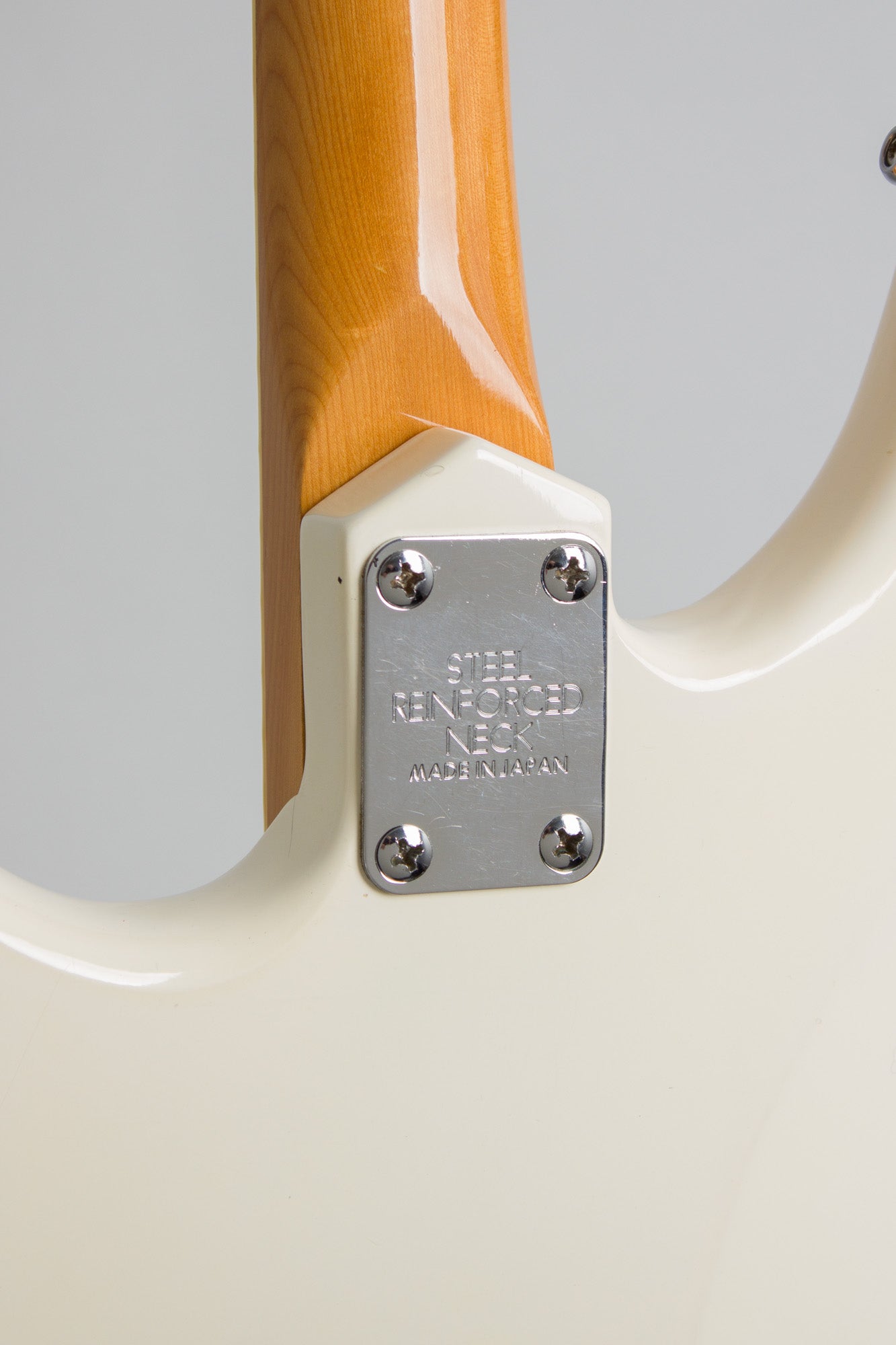
The natural-finished neck is "Steel Reinforced" with a Fender-pattern headstock (albeit with an extra carved ledge) and a multi bound rosewood fingerboard slightly angled at the body end. The dot position markers are oddly offset to the upper side of the fingerboard. The tuners are typical Japanese from the period but the fretwork is superior to most from this era, the whole guitar really does offer a more "Professional" feel than the bulk of Japanese imports of the period. This is a really nice guitar of this type and period, quite the stylish looker and pleasant to play as well.
Overall length is 40 3/4 in. (103.5 cm.), 13 3/4 in. (34.9 cm.) wide at lower bout, and 1 1/2 in. (3.8 cm.) in depth, measured at side of rim. Scale length is 24 3/4 in. (629 mm.). Width of nut is 1 9/16 in. (40 mm.).
This gleaming white guitar shows only light play wear overall and remains nicely original and in excellent playing condition. There are some small nicks, scrapes and dings to the body finish, most notably near the edges. The back of the neck is very clean with only a couple of tiny dinks.
The fittings and electronics remain original and relatively clean for a 50+ year old instrument; even the original trem arm and bridge cover are present. The switch tip is the only piece we're not sure of, but there is so much variation in these guitars we can't say for sure if it was replaced along the way.
The rosewood fret board and original frets show only very light wear. This is a fine playing and sounding example of this sharp looking better-than-many Japanese model residing in the original slightly trapezoidal black hard case. Overall Excellent Condition.