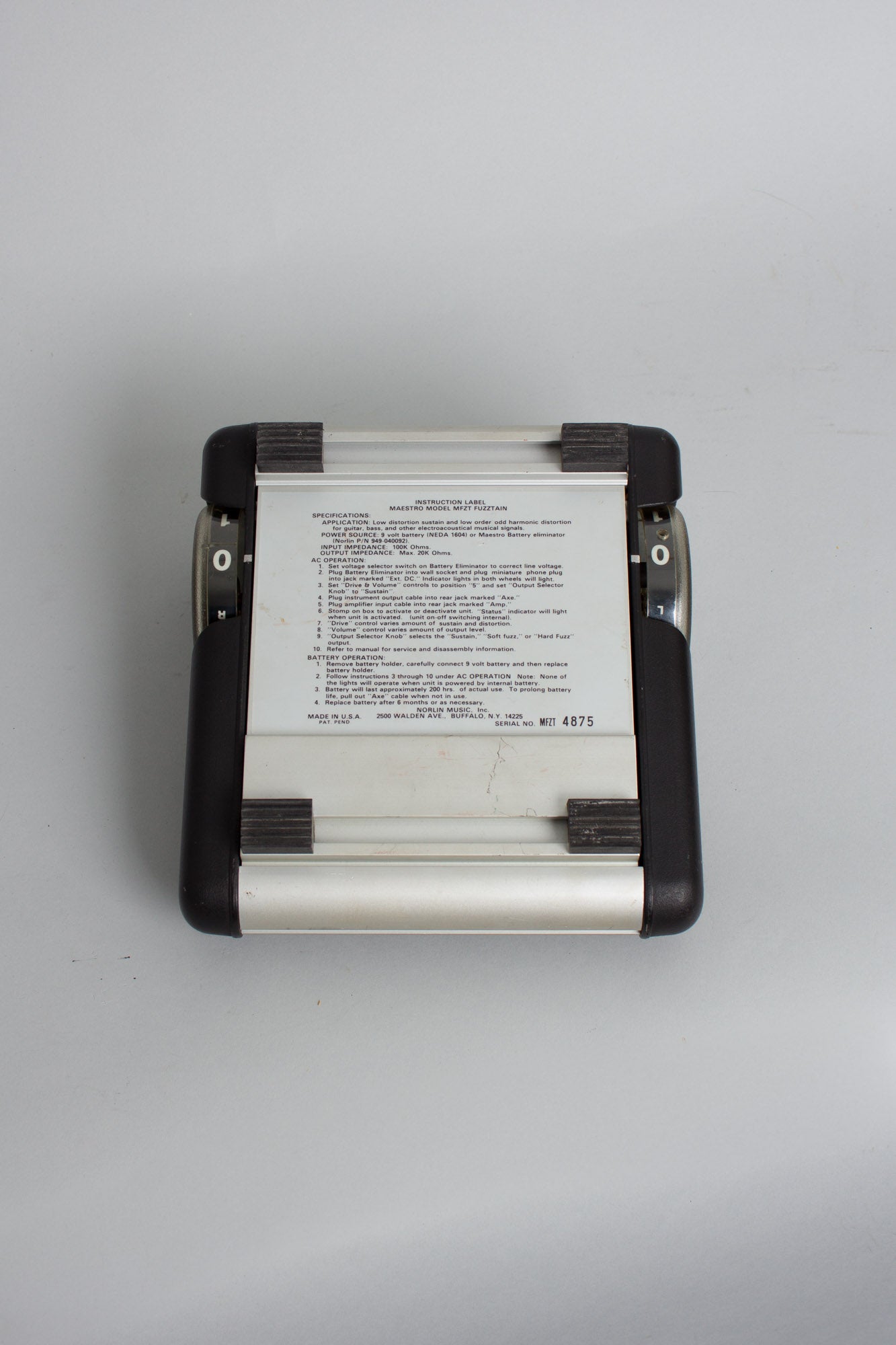
Maestro MFZT Fuzztain Owned and Used by Tom Verlaine Model Fuzz Effect (1976), made in Buffalo, NY, serial # 4875, aluminum and plastic enclosure.
The Maestro Fuzztain is in the family of Maestro's classic 1970s fuzz units developed by Norlin's independent electronics division (which was headed at the time by Robert Moog). These shortlived and unusually massive pedals, alongside the ever so slightly smaller MFZ, are battle built and feature unique rotary wheels on the sides for the drive and volume instead of conventional knobs -- may take up half your pedalboard, but well-designed for on-stage foot operation!
Similar to the MFZ-1, the MFZT is an early example of an op-amp fuzz circuit and the tone, nestled somewhere between a classic fuzz and an overdrive. The tone is quite different from the original 1960s Maestro Fuzz Tone FZ-1A: a fatter, beefy tone and a healthy dose of sustain when cranked. It was seemingly enough for Tom Verlaine, described by his bandmate as a "connoisseur of fuzz," who used this one on ample studio recordings.
Overall length is 8 in. (20.3 cm.), 7 1/2 in. (19 cm.) width, and 3 3/4 in. (9.5 cm.) deep.
This overall well-preserved example is all original inside and out, seemingly including the battery snap, with pots dating to the latter half of 1976; this is a pretty unique enclosure, and accessing the board inside is an endeavor. The pot in the drive footwheel is a little scratchy, but original. There's a bit of wear proportional to some stage and (mostly) studio use by Verlaine, and as with many of Tom's other effect pedals the battery cavity cover is missing for easier access to a quick 9V battery swap. No time to fiddle with screwdrivers when you're rushing to a packed-out gig at CBGB. It does have the option to run off of an external 3.5mm adapter that is not included; these are less popular now, but very easy to find or use an adapter on a common 9V wall wart. The pedal also comes with a letter of provenance from Jimmy Rip (his co-guitarist on most Verlaine projects since 1981). Excellent Condition.