Gibson L-4 Model Arch Top Acoustic Guitar (1915), made in Kalamazoo, Michigan, serial # 29569, red sunburst top, dark stained back and sides finish, birch back and sides, spruce top; mahogany neck with ebony fingergoard, original black hard shell case.
This is a generally well preserved L-4 from the "pre- Loar era" at Gibson, when guitars ran a distant second to mandolins in the company's catalog. For being nearly 110 years old it appears not too much used and also plays and sounds surprisingly well which not all of these do!. The factory order number indicates it was built in mid 1915 and the serial number suggests was shipped out fairly soon after.
The guitar is generally similar to early 1910s L-4's but feels just a bit sleeker overall, a streamlining process that accelerated when Master Loar joined the firm. The sunburst top finish is early Gibson varnish with a beautiful unfaded deep red hue with a slightly darker, more subtly blended look than some examples. The back and sides are a deep cherry stain over the white birch. The top and back are single bound and the elaborate ring on the oval soundhole has delicate chain marquetry with a diamond pattern center strip. The carved spruce top is braced in a modified "H" pattern, the entire carved top structure is worked thinner on this one than many early L-4s which results in an unusually light and livelier sounding example.
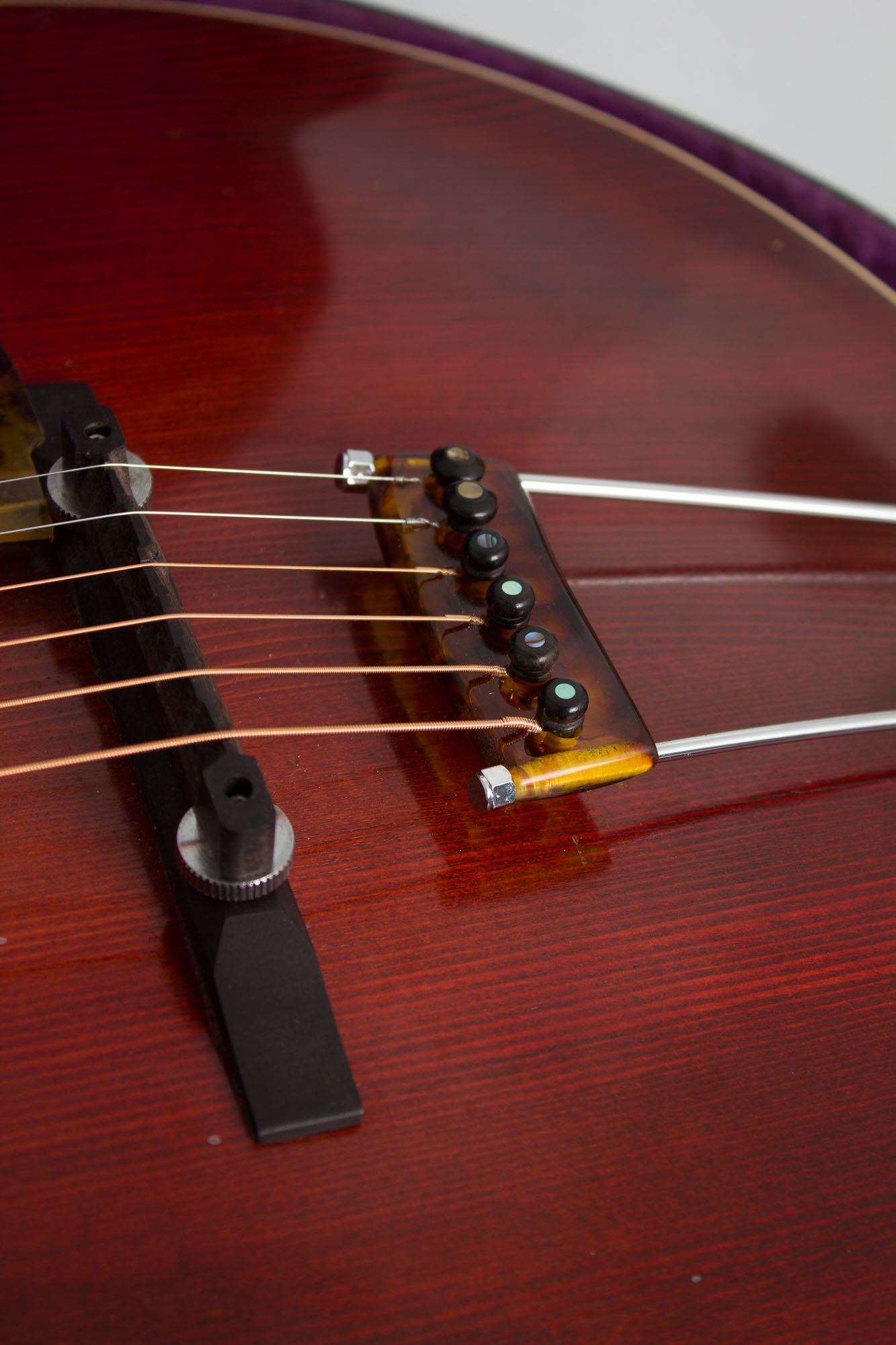
The 3-piece laminated mahogany neck has a wide, deep "V" profile that is notoriously clunky; this is substantial, but not as massive as some, with a modern 1 11/16" nut width on the bound ebony fingerboard. A sharply slanted "The Gibson" pearl logo sits atop the single-bound peghead. The typical pre-1920's hardware includes Gibson's eccentric floating pin tailpiece bar, floating celluloid pickguard with two clamps at the edge and engraved plate Handel tuners. The original non-adjustable bridge has been replaced with a modern adjustable ebony unit.
While the $150 L-4 was not Gibson's top-line guitar in 1917 only the Style U Harp Guitar and the elaborate Art Nouveau Style O exceeded it in price. The L-4's large 16" wide body was more conventionally shaped than either of those but with a carved top and back it was still unlike any other guitar available at the time. Martins of this era were still firmly gut-string instruments, and the L-4's steel-string, arch-top power and punch was unique. Many early jazz greats used slightly later L-4s extensively into the late 1920s, including Eddie Lang and Freddy Guy with Duke Ellington's Orchestra.
The L-4 is usually Gibson's most conventionally accessible early guitar for the modern player, and this is a very good example in that regard. The neck is quite chunky but the action is very comfortable. The sound is among the best we have heard from a pre-Loar example, deeper and richer than most (some 1910s Gibson archtops are lacking in this regard!) with considerable power. "It sounds like a real guitar" may seem like faint praise, but in this case is an indication of a particularly nice player's example of this instrument!
Overall length is 38 3/4 in. (98.4 cm.), 16 1/4 in. (41.3 cm.) wide at lower bout, and 2 7/8 in. (7.3 cm.) in depth at side, taken at the end block. Scale length is 25 in. (635 mm.). Width of nut is 1 11/16 in. (43 mm.).
This guitar is in very nice original condition for being over 100 year old, and overall shows comparatively minor wear. The all-original varnish finish is still shiny with some scuffing, dings and dents here and there but apart from some nicks to the top no major play wear. A pretty deep case-lid ding to the top above the soundhole is the most notable wear, along with some smaller scratches. No crack or seam repairs are evident, which is delightfully unusual with a guitar of this vintage.
The ebony fingerboard appears to have been neatly refretted, possibly a long time ago as the wire is quite thin, if not quite as much so as the original was. These have some very light wear in the lower positions, nothing that affects play. As noted the original one-piece bridge has been replaced with a modern adjustable unit, also the tailpiece is a reconstruction using the original baseplate with a later arm section and a reproduction celluloid bar, holding the original pins. As the bar often has fallen prey to celluloid disintegration this is not too surprising. The pickguard, clamps and tuners are original. This is a lovely period piece and a far more playable guitar than most similar period L-4s we have seen, housed in the original purple-lined Gibson HSC. Overall Excellent - Condition.