Gibson L-30 Model Arch Top Acoustic Guitar (1935), made in Kalamazoo, Michigan, serial # 376A-46 (FON), black lacquer finish, maple back and sides, spruce top; mahogany neck with rosewood fingerboard, black chipboard case.
The mid-1930's L-30 is a fairly unusual Gibson but typical of its era, a small-body archtop guitar with the plainest trim but impeccable craftsmanship. This model was introduced in 1935 as the new bottom of the line carved-top guitar, when the previously lowest-priced L-50 archtop was upgraded to the larger 16" body. During the Great Depression instrument makers had to built affordable guitars or face extinction! The body pattern is actually quite similar to the contemporary L-0 flat top, with a flat back but fitted with an arched, fully carved F-hole soundboard. These early L-30's had a plain black finish overall, which allowed visually flawed woods to be used but now gives this little archtop a sort of badass elegance.
The maple body is single bound on the F-hole spruce top with an unbound back, simple adjustable rosewood bridge and nickel plated tailpiece. The mahogany neck has a shallow but fairly sharp "V" profile, the unbound rosewood fingerboard is inlaid with pearl dots while the headstock features a white silkscreen Gibson script. The tuners are simple unplated brass strips with celluloid buttons.
These small-body Gibson archtops only exist in the 1930s; they have a distinctive feel and sound with plenty of punch. While not as smooth-toned as their larger brethren these smaller "L's" work well for many period styles like blues, ragtime and jug band music and make surprisingly good fingerpickers. This is a very nice playing and sounding guitar, and a nicely preserved pre-war period piece.
Overall length is 39 3/4 in. (101 cm.), 14 3/4 in. (37.5 cm.) wide at lower bout, and 3 5/8 in. (9.2 cm.) in depth, measured at side of rim. Scale length is 24 3/4 in. (629 mm.). Width of nut is 1 13/16 in. (46 mm.).
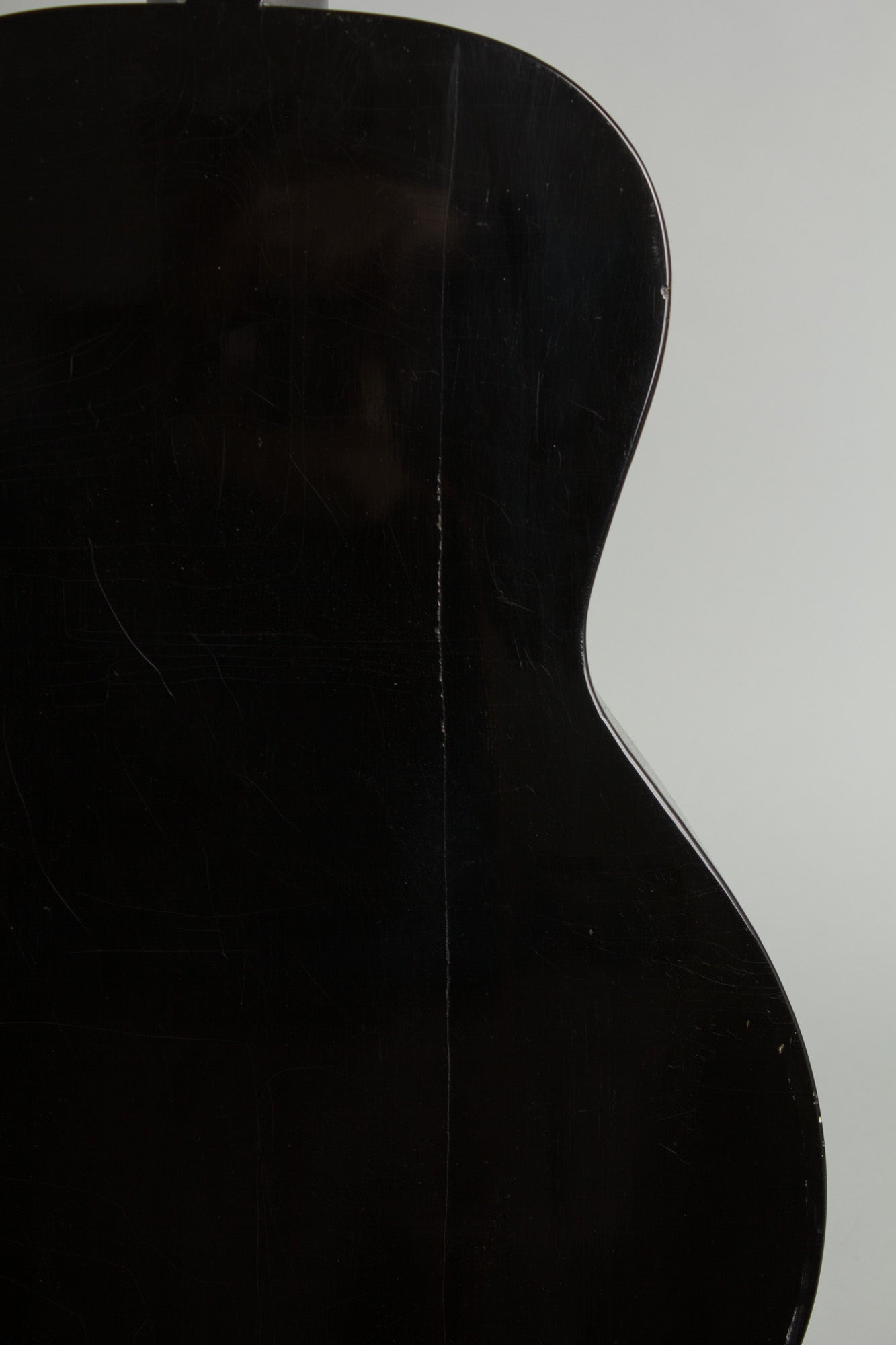
This is a generally decently well preserved guitar for being 90 or so years old, showing general wear overall and one noticeable repair. This is a long grain crack running all the way along the flat back, well sealed but not finished over. The original black finish has scuffing, dings, dents, scratches and other disturbances; the back of the neck may have had a bit of lacquer touch up long ago but this is not conspicuous. The pickguard is long gone but the remaining hardware is original and complete. The original frets have some noticeable wear but still play well, and the guitar has a good chunky sound for a small body archtop. It lives in a later chipboard case. Overall Very Good + Condition.