Gibson J-50 Model Flat Top Acoustic Guitar (1965), made in Kalamazoo, Michigan, serial # 252628, natural lacquer finish, mahogany back and sides; spruce top, mahogany neck with rosewood fingerboard, black hard shell case.
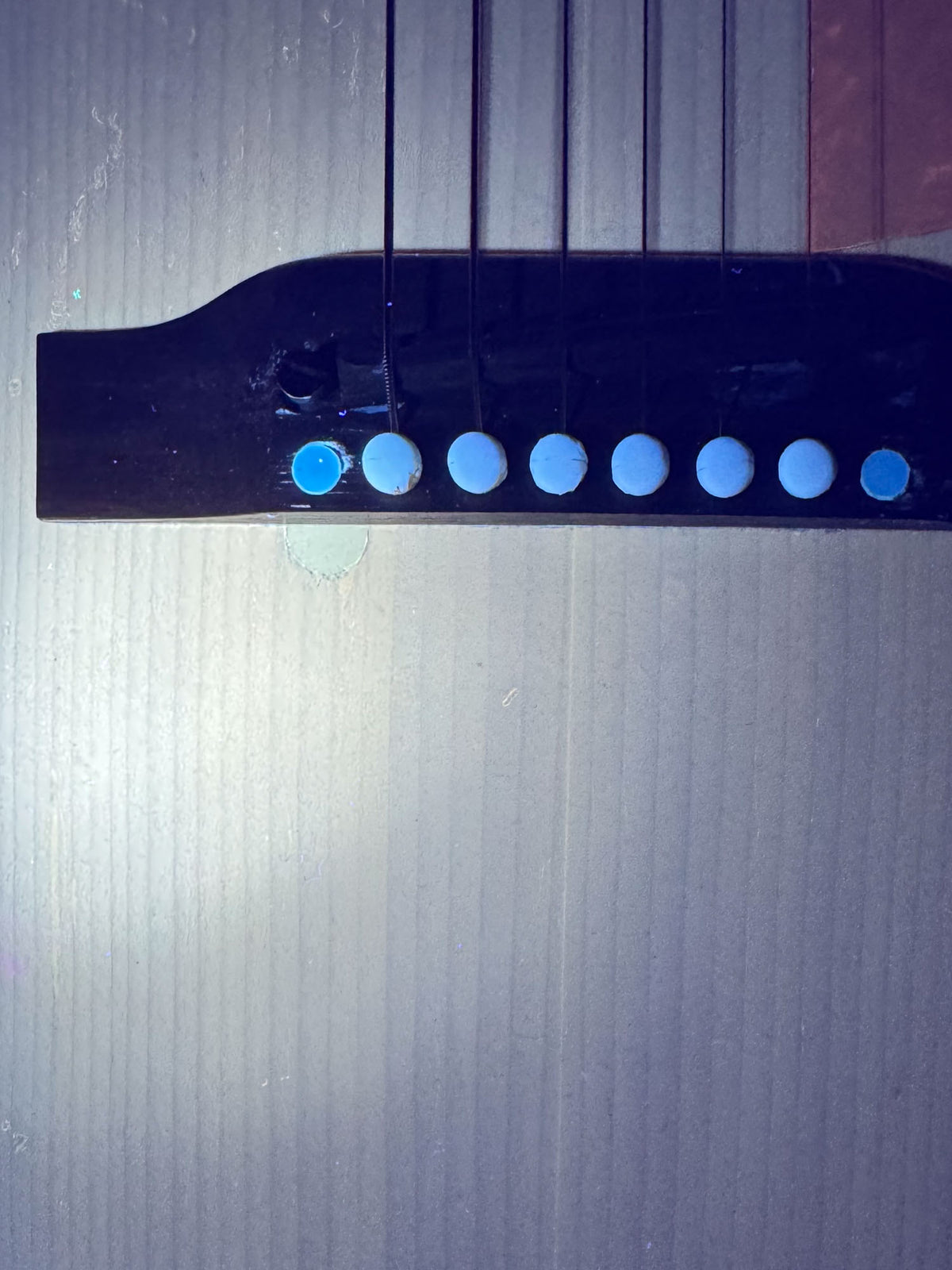
This mid-60s Gibson J-50 is a fine playing and sounding example but is (faintly) marked as a factory second for a pretty noticeable reason. Many Gibsons branded with the small "2" on the back of the headstock show no clue as to why, but this one is pretty obvious. On the top just off the back end of the bass side of the bridge is a small round patch of mis-matched wood UNDER the original finish. Looking inside, there are round maple patches on both ends of the bridgeplate. It appears that a Gibson worker mis-drilled the holes for the adjustable bridge studs in the farther-back position correct for an Epiphone Texan, which used the same body but had a 3/4" longer scale. The bridge pin holes are in the correct position for a J-50, however. 1965 was Gibson's top production year of the decade and a lot of shortcuts were taken; Instead of trashing this body the factory finished it out and sold it as a second.
By the mid-1960's all of Gibson's slope-shouldered Jumbo guitars had been popular with Folk, Blues and Pop players for about 30 years; in the early '60s Folk era they really took off as some of Gibson's best sellers. It's easy to see why; this is a very comfortable guitar to play with a sleek, round neck and a very warm, versatile sound. The neck has the slimmer nut width that had become ubiquitous by 1965, but otherwise the instrument is little changed from earlier 1960s models.
The J-50 is essentially the same instrument as the J-45 with a natural top finish. This was originally worth a small markup to Gibson but by 1965 both models listed for the same $175, plus case. Over the years the natural-top guitars were generally produced in smaller numbers than that familiar sunburst-top favorite, but by 1964 the J-50 was the more popular option.
The backstrip is stamped "J-50 ADJUSTABLE BRIDGE" as the guitar is fitted with the company's adjustable-saddle rosewood bridge, which was the only option available in 1965. While many used to consider this a sonic demerit, over the last few decades some players have come to prefer the guitar unaltered with the slightly more condensed sound this setup usually produces.
1965 was Gibson's top production year of the decade and saw a grand total of 4312 of these J-50 ADJ's ship out of Kalamazoo at a list price of $175; as a second this one was likely not even included in those totals. The J-50 was favored notably at the time by Jorma Kaukonen and Texas blues legend Lightnin' Hopkins, among many others! This oddball second with a redeemed factory error is a quirky guitar but was well cared for and remains one of those nice friendly guitars you just don't want to put down.
Overall length is 41 in. (104.1 cm.), 16 in. (40.6 cm.) wide at lower bout, and 5 in. (12.7 cm.) in depth at side, taken at the end block. Scale length is 24 3/4 in. (629 mm.). Width of nut is 1 21/32 in. (27 mm.).
This just 60+ year old guitar shows only wear overall, but beyond its factory mistake does have one notable repair, a tight crack through the lower part of the neck heel. Usually this sort of damage occurs during a neck reset but there is no evidence one was ever performed on this adjustable-bridge guitar. The heel has a small impact mark on the edge, so we suspect that was what caused this split long ago. This has been neatly sealed up very solidly without any intrusive touch up, so is inconspicuous and not an ongoing issue.
Apart from this there are no visible cracks. A spot of finish melt on the center of the back looks like a possible grain split at first, but there is no associated crack inside the instrument. The all-original finish is pretty clean overall showing some minor checking with scuffs, dings and dents scattered around and those marks on the back likely from the finish reacting to a plastic strap long ago. There is virtually no pickwear and the back of the neck is quite clean with only a few tiny dents; really the guitar does not look much played.
The pickguard was replaced at some point with a decent looking repro, generally accurate although the edges are not exactly beveled correctly. The bridge was reglued some time back and the small securing bolts under the pearl dots removed; the adjustable saddle and large bolts securing it are still intact. This J-50 plays and sounds very nice, with a deeper, warmer sound than many from this era; a bit of a misfit perhaps but a sweet and friendly guitar, a lovely singer or songwriter's companion residing in a more modern HSC. Overall Very Good + Condition.