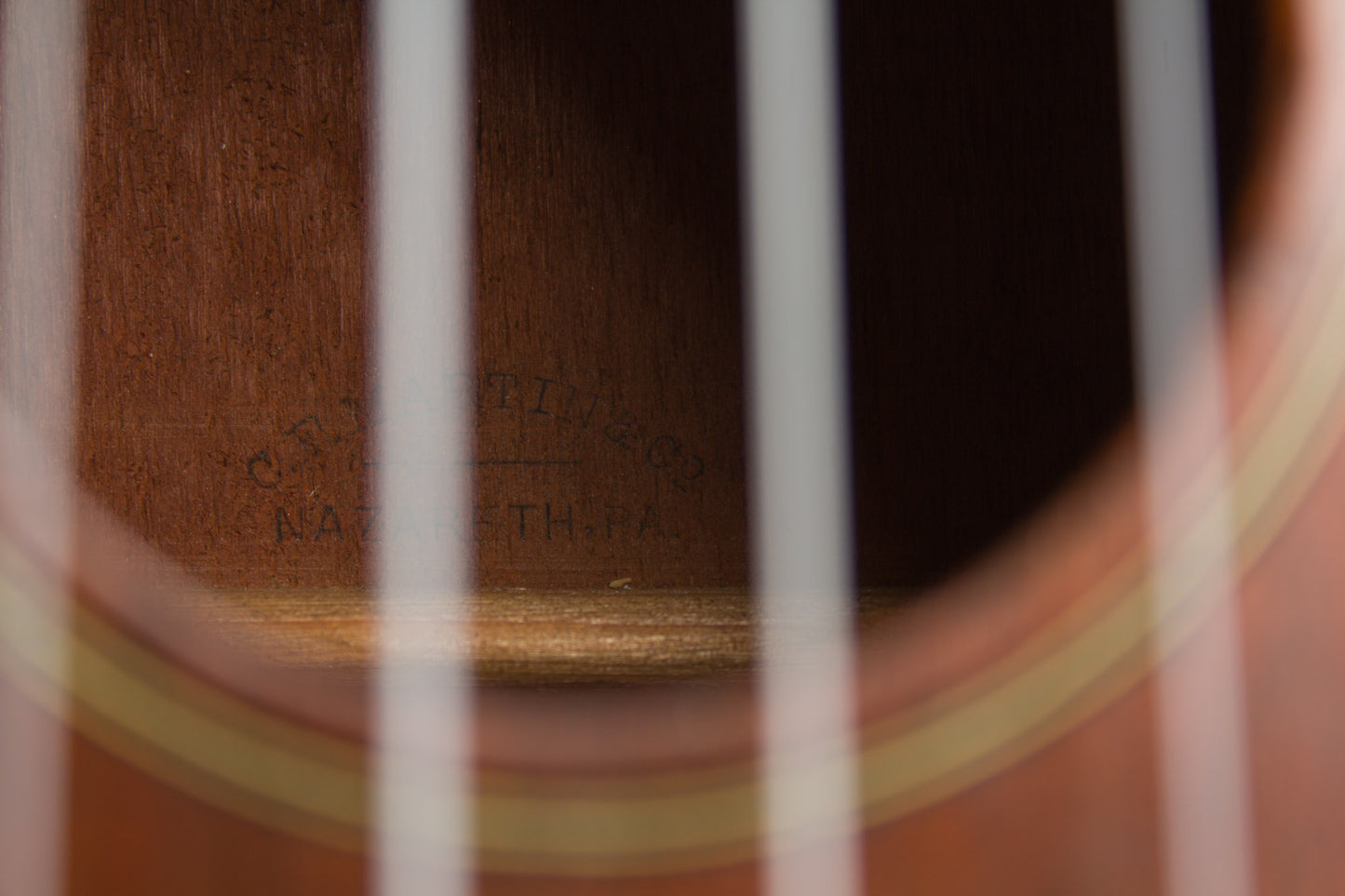
C. F. Martin Style 1-C Model Concert Ukulele (1926), made in Nazareth, PA, natural lacquer finish, mahogany body and neck, rosewood fingerboard, black tolex hard shell case.
This is a somewhat worn and visibly repaired but good-playing example of one of our most requested instruments: an original 1920s Martin Concert ukulele. The "Concert" size ukulele is bigger than the soprano but smaller and more "uke-like" in feel than the tenor; it is essentially a 4-string version of the 1920s Martin 8-string taro-patch. As these were considered harder to play (and tune!) in the gut-strung 1920s Martin began to get requests for 4-string versions, enough that by 1925 they cataloged it as a separate model. The cosmetic features are the same as a Style 1 soprano ukulele with a wood-bound mahogany body and neat, plain trim overall.
The larger body and longer neck give not only a deeper, richer tone, but the fingerboard has more room for advanced modern uke stylings. This Style 1-C dates to right around 1925-6; it has the earliest features of the model including wood friction pegs, which were replaced in 1927 with metal friction pegs. This is a fairly rare instrument; less than 600 total would have been made with the wooden pegs just about a century ago. It shows an old repair to the headstock but remains in very good playing condition with a great sound.
Overall length is 23 1/4 in. (59.1 cm.), 7 3/4 in. (19.7 cm.) wide at lower bout, and 2 3/4 in. (7 cm.) in depth at side, taken at the end block. Scale length is 15 in. (381 mm.). Width of nut is 1 3/8 in. (35 mm.).
This uke shows signs of serious use especially one major repair, a lateral split in the headstock running from the top edge through the third string tuner hole diagonally down to just below the nut. Ukes rarely get headstock repairs, but this is how they usually happen; the instrument was probably dropped on the projecting long wood tuning peg ages ago, splitting the wood on the grain line. This was solidly repaired in the distant past with some polish out to the finish. The face of the headstock also has the name "Dyer" carved in a somewhat sloppy script and small marks along the top edge that look like shallow tooth marks from a small child or animal.
Apart from these anomalous headstock disasters the rest of the instrument survives in better condition, remaining original with some typical finish wear, mostly small dings, scratches, chips and dents overall. There is a small spot of "strum wear" through the finish on the top just below the soundhole. The top has a well-repaired tight grain split running down from the bridge below the second string to the back edge. The sides have a couple of very smalls sealed splits. While the headstock repair is unfortunate and the added logo inexplicable this rare uke obviously has some history behind it and a century along still plays and sounds excellent, complete in a modern HSC. Very Good Condition.