


C. F. Martin D-18 Flat Top Acoustic Guitar (1940)


1
/
of
14
Couldn't load pickup availability
Item #11604
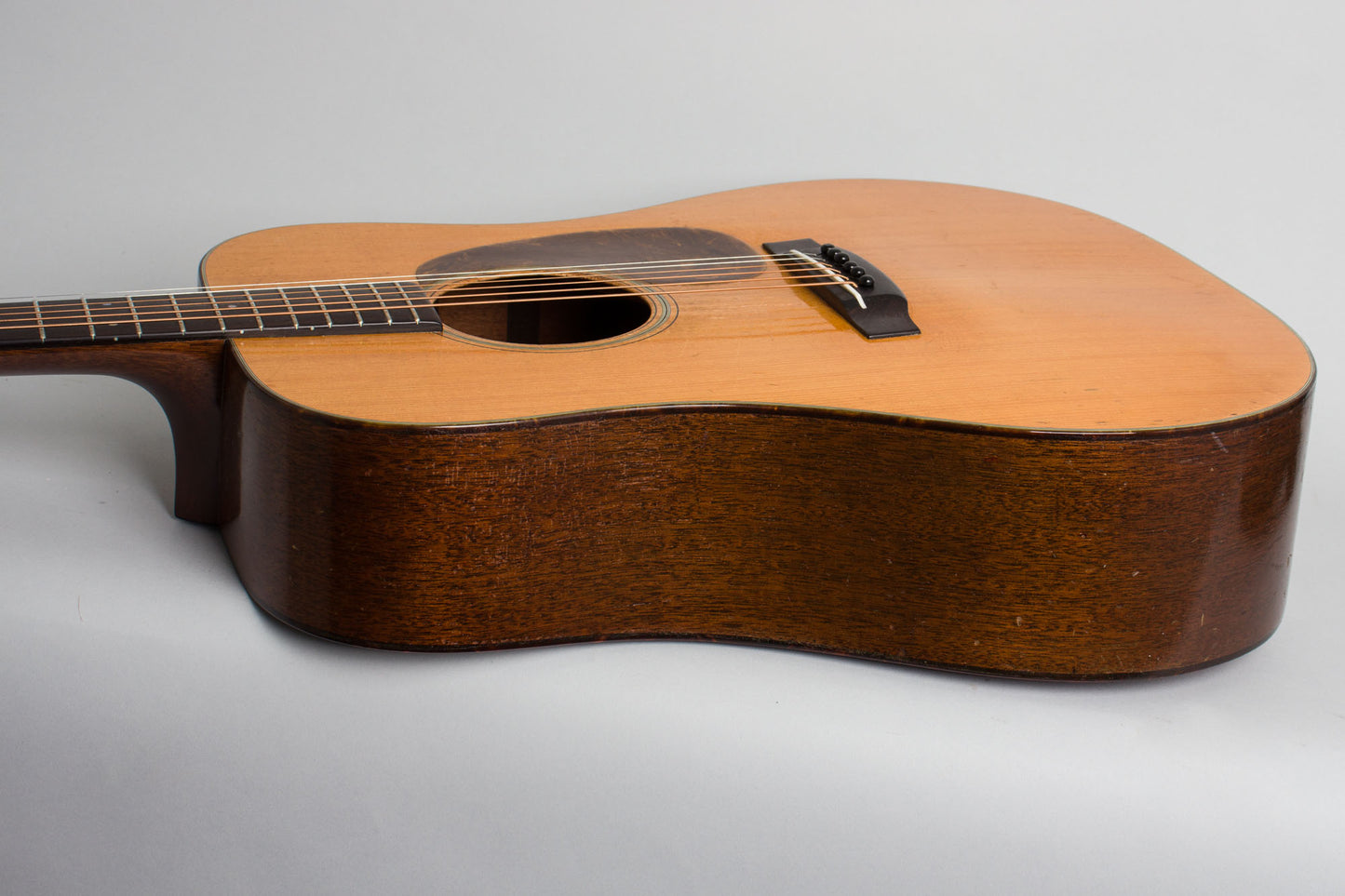
C. F. Martin D-18 Model Flat Top Acoustic Guitar (1940), made in Nazareth, PA, serial # 74124, natural lacquer finish, mahogany back, sides and neck, spruce top, ebony fingerboard, tweed hard shell case.
Certain guitars have long been the standard by which many are judged; the Pre-war Martin D-18 is one of them. This very early 1940 example shows a notable repair to the headstock and a decent amount of play wear but remains an excellent instrument offering the expected fantastic sound in spades. The power and depth of a Dreadnought combines with the sweetness, sparkle, and singing character of the best pre-WWII mahogany Martins in a magical mix, making this an exceptionally versatile flat-top guitar suited to practically any musical situation.
This D-18 shows the final pre-war features of the model, introduced in this form in late 1934 and widely imitated ever since. The back and sides are Honduras mahogany and the top is tight-grained Appalachian spruce, bound on the edge with tortoise celluloid. The ebony belly bridge has a canted bone saddle. The pickguard is made of tortoise celluloid in a small "teardrop" shape.
The neck is mahogany with an unbound ebony fingerboard discreetly inlaid with small mixed-size pearl dots. The peghead is faced in Brazilian rosewood with the gold "C.F. Martin & Co." decal at the top. The slim neck profile is round backed but with the slightest hint of a "V" profile in the way the sides bear away from the center as it moves towards the nut, which is slightly narrower than mid-thirties examples. The headstock veneer it tortoise Celluloid instead of rosewood, an interesting quirk of some Martins from this year.
This guitar shows signs of serious play time; considering how these instruments often got used this is fairly common. A large percentage of period Country and Western performers found their favorite guitar in a Martin Dreadnought. In 1940 the price of a new D-18 was $65 (without a case), a sizable expense for many Americans at the time. They sold decently by contemporary standards, with 377 shipped that year. By the 1950s Martin was building two or three times that amount yearly; pre-war examples were fairly scarce even then.
In the minds of most acoustic guitar players, collectors, and historians this is still one of the finest performing or recording guitars imaginable. The rosewood D-28 is optimized for power and bass response, while the D-18 is often a more versatile instrument combining the mellow depth of the Dreadnought with a crisp, slightly dry mahogany ring. Despite a mishap decades ago this remains a great player's pre-war D-18 ready for many more years of service.
Overall length is 40 3/4 in. (103.5 cm.), 15 5/8 in. (39.7 cm.) wide at lower bout, and 4 7/8 in. (12.4 cm.) in depth at side, taken at the end block. Scale length is 25 1/2 in. (648 mm.). Width of nut is 1 5/8 in. (41 mm.).
Now well over 80 years old, this D-18 has seen its share of repair but remains in fine playing shape with many more years of music in its future. The most notable is to the headstock, which was split through along the high and low E string tuners on the face, angling along the grain back to below them on the rear. This was a very clean break and has been quite solidly repaired; it is fully stable but the entire neck was oversprayed as a result. There has been some subsequent wear to the back of the neck with one feelable ding behind the 2nd fret. The repair is visible on close inspection but was touched up tastefully at the time.
The body retains much of the original finish, with a decent amount of wear overall and some touch-ups on the top. The back and sides have fairly heavy checking, dings, nicks and scratches overall but no noticeable cracks except for a tiny grain split to the upper side above the heel. The top shows some deeper dings and scrapes but much less pick wear than many. There is some touch up to the lower soundhole rim but none of the deep pick gouges often found on the rest of the finish.
The top does show some notable repairs; the neck block has been reglued at the top edge, that area of the top showing a couple of visible repaired cracks along the treble side of the fingerboard extension. A small inset strip of spruce was discreetly added along the bass side of the fingerboard extension; this is not visible internally so is not through the full depth of the top. The neck has been neatly reset and refretted, the fingerboard was trued and has a very thin shim of ebony running under the fingerboard extension up the neck.
The bridge has been reglued; it had a long split through the pins so has been very neatly capped with another ebony piece. The bone saddle and nut are newer. Internally, the original bridgeplate has been replaced with a slightly larger maple piece. All of the original scalloped braces are intact and structurally sound, there are two small brace reinforcements added along the outside edges of the X-brace adjacent to the bridgeplate. The first tone bar closest to the bridgeplate has been reglued at the end. The top has some bulging in the behind-the-bridge area but nothing severe and shows several tiny grail splits off the back edge of the bridge that do not run the full depth of the spruce.
The headstock repair is completely solid; it is fitted with a modern set of Waverly tuners. While the headstock mishap was unfortunate, it does not affect the guitar in any functional way and it remains an excellent player's instrument, not as original as some but still offering a full value in sound. It is housed in a modern hardshell case, fleece lined and covered with tweed printed Tolex. Overall Very Good Condition.
View full details
Certain guitars have long been the standard by which many are judged; the Pre-war Martin D-18 is one of them. This very early 1940 example shows a notable repair to the headstock and a decent amount of play wear but remains an excellent instrument offering the expected fantastic sound in spades. The power and depth of a Dreadnought combines with the sweetness, sparkle, and singing character of the best pre-WWII mahogany Martins in a magical mix, making this an exceptionally versatile flat-top guitar suited to practically any musical situation.
This D-18 shows the final pre-war features of the model, introduced in this form in late 1934 and widely imitated ever since. The back and sides are Honduras mahogany and the top is tight-grained Appalachian spruce, bound on the edge with tortoise celluloid. The ebony belly bridge has a canted bone saddle. The pickguard is made of tortoise celluloid in a small "teardrop" shape.
The neck is mahogany with an unbound ebony fingerboard discreetly inlaid with small mixed-size pearl dots. The peghead is faced in Brazilian rosewood with the gold "C.F. Martin & Co." decal at the top. The slim neck profile is round backed but with the slightest hint of a "V" profile in the way the sides bear away from the center as it moves towards the nut, which is slightly narrower than mid-thirties examples. The headstock veneer it tortoise Celluloid instead of rosewood, an interesting quirk of some Martins from this year.
This guitar shows signs of serious play time; considering how these instruments often got used this is fairly common. A large percentage of period Country and Western performers found their favorite guitar in a Martin Dreadnought. In 1940 the price of a new D-18 was $65 (without a case), a sizable expense for many Americans at the time. They sold decently by contemporary standards, with 377 shipped that year. By the 1950s Martin was building two or three times that amount yearly; pre-war examples were fairly scarce even then.
In the minds of most acoustic guitar players, collectors, and historians this is still one of the finest performing or recording guitars imaginable. The rosewood D-28 is optimized for power and bass response, while the D-18 is often a more versatile instrument combining the mellow depth of the Dreadnought with a crisp, slightly dry mahogany ring. Despite a mishap decades ago this remains a great player's pre-war D-18 ready for many more years of service.
Overall length is 40 3/4 in. (103.5 cm.), 15 5/8 in. (39.7 cm.) wide at lower bout, and 4 7/8 in. (12.4 cm.) in depth at side, taken at the end block. Scale length is 25 1/2 in. (648 mm.). Width of nut is 1 5/8 in. (41 mm.).
Now well over 80 years old, this D-18 has seen its share of repair but remains in fine playing shape with many more years of music in its future. The most notable is to the headstock, which was split through along the high and low E string tuners on the face, angling along the grain back to below them on the rear. This was a very clean break and has been quite solidly repaired; it is fully stable but the entire neck was oversprayed as a result. There has been some subsequent wear to the back of the neck with one feelable ding behind the 2nd fret. The repair is visible on close inspection but was touched up tastefully at the time.
The body retains much of the original finish, with a decent amount of wear overall and some touch-ups on the top. The back and sides have fairly heavy checking, dings, nicks and scratches overall but no noticeable cracks except for a tiny grain split to the upper side above the heel. The top shows some deeper dings and scrapes but much less pick wear than many. There is some touch up to the lower soundhole rim but none of the deep pick gouges often found on the rest of the finish.
The top does show some notable repairs; the neck block has been reglued at the top edge, that area of the top showing a couple of visible repaired cracks along the treble side of the fingerboard extension. A small inset strip of spruce was discreetly added along the bass side of the fingerboard extension; this is not visible internally so is not through the full depth of the top. The neck has been neatly reset and refretted, the fingerboard was trued and has a very thin shim of ebony running under the fingerboard extension up the neck.
The bridge has been reglued; it had a long split through the pins so has been very neatly capped with another ebony piece. The bone saddle and nut are newer. Internally, the original bridgeplate has been replaced with a slightly larger maple piece. All of the original scalloped braces are intact and structurally sound, there are two small brace reinforcements added along the outside edges of the X-brace adjacent to the bridgeplate. The first tone bar closest to the bridgeplate has been reglued at the end. The top has some bulging in the behind-the-bridge area but nothing severe and shows several tiny grail splits off the back edge of the bridge that do not run the full depth of the spruce.
The headstock repair is completely solid; it is fitted with a modern set of Waverly tuners. While the headstock mishap was unfortunate, it does not affect the guitar in any functional way and it remains an excellent player's instrument, not as original as some but still offering a full value in sound. It is housed in a modern hardshell case, fleece lined and covered with tweed printed Tolex. Overall Very Good Condition.


Loading...
Just arrived!
Item #