C. F. Martin D-18 Flat Top Acoustic Guitar (1935)


1
/
of
14
Couldn't load pickup availability
Item #11605
C. F. Martin D-18 Model Flat Top Acoustic Guitar (1935), made in Nazareth, PA, serial # 61737, natural lacquer finish, Mahogany back and sides, spruce top; mahogany neck with ebony fingerboard, original black hard shell case.
Although a relatively austere looking instrument, this very early D-18 is one of the loveliest and most historically important Martin guitars we have had. On practically anyone's list of all time great guitars, the pre-WWII Martin D-18 Dreadnought ranks among the highest. This example of the "perfected" 14-fret D-18 was made in late 1935, one of only 133 shipped that first full production year. By later standards this is a small number indeed. All of 4 had shipped out at the end of 1934, so this guitar is one of the first 130 or so of this seminal model.
The first mahogany bodied 12-fret Dreadnoughts had been made in miniscule numbers exclusively for Ditson from 1916 until that company folded in late 1930. Martin then offered the special large-bodied design to CMI (Chicago Musical Instruments) as a possible exclusive before eventually deciding to make it a standard model. The first 2 made in 1931 were designated D-1; 64 more 12-fret D-18 models were made over the next 3 years before feedback from CMI and others prompted a re-design into a 14-fret model. Of course, since then the D-18 and its rosewood sibling the D-28 have been the design paradigm for literally millions of flat top guitars.
This guitar has the earliest features of the then-new 14 fret model including the "advanced" forward scalloped X Bracing and wider nut that have become the connoisseur's choice on pre-war Martin dreadnoughts. Other much desired features of the era include a close-grain Adirondack spruce top, ebony bridge and fingerboard, tortoise celluloid pickguard and binding and openback Grover G-98 "butterbean" button tuners with riveted shafts. This neck is not only wider but also somewhat chunkier in feel than Martin necks from the next decade, with a residual "soft V" profile that becomes more prominent as the neck approaches the body. The bracing is very delicate for a Dreadnought, beautifully scalloped behind the bridge for the most responsive top.
This D-18 plays effortlessly with a superbly detailed and powerful sound. These early Dreadnoughts were juts becoming known to professional Country & Western radio and stage entertainers in 1935; soon they would become the most popular choice, setting a standard still followed today. This D-18 is a fantastic performing or recording guitar, with the mellow depth of the Dreadnought mixed with the crisp slightly dry ring of a mahogany body. This early example has been used but not abused, expertly maintained and a superb player with the divine sound these are prized for.
Overall length is 40 3/4 in. (103.5 cm.), 15 3/4 in. (40 cm.) wide at lower bout, and 4 15/16 in. (12.5 cm.) in depth at side, taken at the end block. Scale length is 25 1/2 in. (648 mm.). Width of nut is 1 3/4 in. (44 mm.).
This early D-18 has seen some notable repair but has survived over nearly nine decades better than many. The all original thin lacquer finish shows no overspray. Strum wear through the lacquer off the front edge of the pickguard is the most notable finish disruption, with a smaller spot off the back edge with a couple of longer attendant scratches. The rest of the instrument shows dings, dents and scrapes but no really heavy wear; there is a deep impact mark on the upper side waist and some heavier scratching on the lower side and back. The back of the neck is surprisingly clean with only a few small dinks and some typical loss to the edges.
This Martin has remained in remarkable structural shape, given its age and lightly built design. There are two tightly closed spruce grain splits to the top running from the bridge to the back edge, sealed but visible with some very light touch up. A small sealed grain split can be seen off each edge of the fingerboard extension. The neck block shows no signs of movement. A small impact crack has been neatly glued on the bass side of the lower bout.
The neck has been very neatly reset, and the ebony fingerboard planed and refretted with a new bone nut. The original bridge has been replaced with a modern ebony replica, fitted with a newer compensated bone saddle. The original bridge, frets and nut are still in the case. Internally the original delicate braces and small maple bridge plate are intact. The tuners remain the original riveted Grover units with "butterbean" metal buttons.
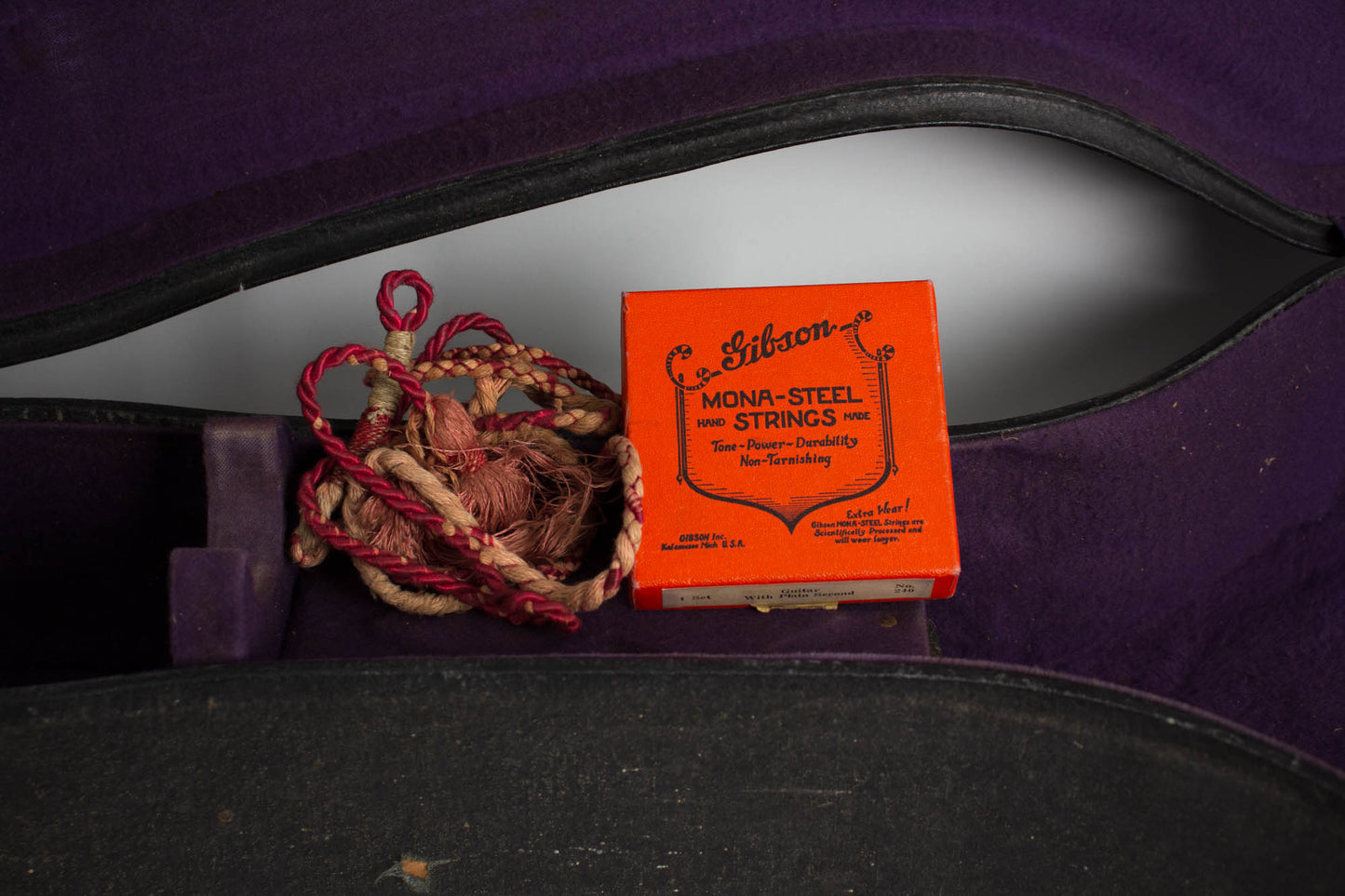
For such an early Dreadnought from Nazareth, this D-18 is an amazing survivor with everything that you would expect; an outstanding instrument that would turn even a vintage D-18 skeptic into a believer. It resides in its impossibly rare original hard case, a lightly built depression-era piece that seldom survives. In the pocket are an old tassel cord strap and period box of Gibson (!) strings. Overall Excellent - Condition.
View full details
Although a relatively austere looking instrument, this very early D-18 is one of the loveliest and most historically important Martin guitars we have had. On practically anyone's list of all time great guitars, the pre-WWII Martin D-18 Dreadnought ranks among the highest. This example of the "perfected" 14-fret D-18 was made in late 1935, one of only 133 shipped that first full production year. By later standards this is a small number indeed. All of 4 had shipped out at the end of 1934, so this guitar is one of the first 130 or so of this seminal model.
The first mahogany bodied 12-fret Dreadnoughts had been made in miniscule numbers exclusively for Ditson from 1916 until that company folded in late 1930. Martin then offered the special large-bodied design to CMI (Chicago Musical Instruments) as a possible exclusive before eventually deciding to make it a standard model. The first 2 made in 1931 were designated D-1; 64 more 12-fret D-18 models were made over the next 3 years before feedback from CMI and others prompted a re-design into a 14-fret model. Of course, since then the D-18 and its rosewood sibling the D-28 have been the design paradigm for literally millions of flat top guitars.
This guitar has the earliest features of the then-new 14 fret model including the "advanced" forward scalloped X Bracing and wider nut that have become the connoisseur's choice on pre-war Martin dreadnoughts. Other much desired features of the era include a close-grain Adirondack spruce top, ebony bridge and fingerboard, tortoise celluloid pickguard and binding and openback Grover G-98 "butterbean" button tuners with riveted shafts. This neck is not only wider but also somewhat chunkier in feel than Martin necks from the next decade, with a residual "soft V" profile that becomes more prominent as the neck approaches the body. The bracing is very delicate for a Dreadnought, beautifully scalloped behind the bridge for the most responsive top.
This D-18 plays effortlessly with a superbly detailed and powerful sound. These early Dreadnoughts were juts becoming known to professional Country & Western radio and stage entertainers in 1935; soon they would become the most popular choice, setting a standard still followed today. This D-18 is a fantastic performing or recording guitar, with the mellow depth of the Dreadnought mixed with the crisp slightly dry ring of a mahogany body. This early example has been used but not abused, expertly maintained and a superb player with the divine sound these are prized for.
Overall length is 40 3/4 in. (103.5 cm.), 15 3/4 in. (40 cm.) wide at lower bout, and 4 15/16 in. (12.5 cm.) in depth at side, taken at the end block. Scale length is 25 1/2 in. (648 mm.). Width of nut is 1 3/4 in. (44 mm.).
This early D-18 has seen some notable repair but has survived over nearly nine decades better than many. The all original thin lacquer finish shows no overspray. Strum wear through the lacquer off the front edge of the pickguard is the most notable finish disruption, with a smaller spot off the back edge with a couple of longer attendant scratches. The rest of the instrument shows dings, dents and scrapes but no really heavy wear; there is a deep impact mark on the upper side waist and some heavier scratching on the lower side and back. The back of the neck is surprisingly clean with only a few small dinks and some typical loss to the edges.
This Martin has remained in remarkable structural shape, given its age and lightly built design. There are two tightly closed spruce grain splits to the top running from the bridge to the back edge, sealed but visible with some very light touch up. A small sealed grain split can be seen off each edge of the fingerboard extension. The neck block shows no signs of movement. A small impact crack has been neatly glued on the bass side of the lower bout.
The neck has been very neatly reset, and the ebony fingerboard planed and refretted with a new bone nut. The original bridge has been replaced with a modern ebony replica, fitted with a newer compensated bone saddle. The original bridge, frets and nut are still in the case. Internally the original delicate braces and small maple bridge plate are intact. The tuners remain the original riveted Grover units with "butterbean" metal buttons.
For such an early Dreadnought from Nazareth, this D-18 is an amazing survivor with everything that you would expect; an outstanding instrument that would turn even a vintage D-18 skeptic into a believer. It resides in its impossibly rare original hard case, a lightly built depression-era piece that seldom survives. In the pocket are an old tassel cord strap and period box of Gibson (!) strings. Overall Excellent - Condition.