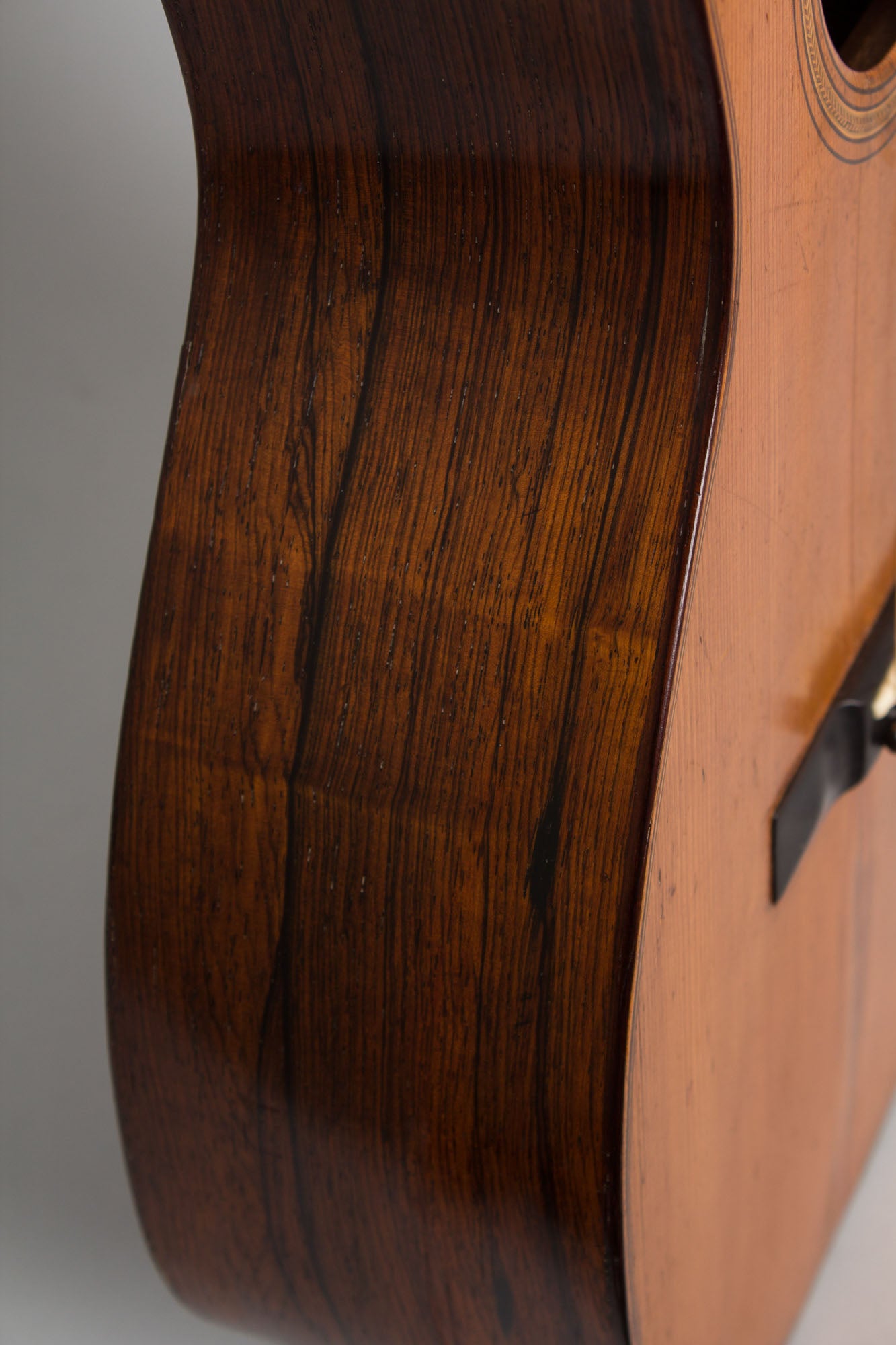
C. F. Martin 2-21 Model Flat Top Acoustic Guitar, c. 1880, made in Nazareth, PA, Natural body, blacked neck finish, Brazilian roaswood back and sides, spruce top; cedar neck with ebony fingerboard, black hard shell case.
Overall length is 37 in. (94 cm.), 12 in. (30.5 cm.) wide at lower bout, and 4 in. (10.2 cm.) in depth at side, taken at the end block. Scale length is 24 1/4 in. (616 mm.). Width of nut is 1 3/4 in. (44 mm.).
With over 140 years under it's belt, this Martin 2-21 is an epic "genuine relic" that has seen much wear and many repairs over the last century + since it first left Nazareth PA. Amazingly enough, it is still a very playable instrument with an entrancingly beautiful sound. Martin built their guitars for the ages, and even this relatively plain model is testament to that. This 2-21 was a popular guitar in the 1870s and '80's, likely Martins best-selling model with a Brazilian rosewood body, spruce top, blacked cedar neck with an "ice cream cone" heel but fairly plain cosmetics.
A fair amount of the original varnish survives, though numerous cracks and repairs have been touched up over the years. There is finish wear everywhere, most notably a strip of light strum wear into the wood extending from the middle of the soundhole to the top of the bridge, where a thin patina has formed over time. On the top, two parallel splines were added from the soundhole to the bottom of the guitar, with cleats placed underneath their length. There are three old grain splits that run between these splines; one extending from the bottom to the bridge, the other two located between the bridge and the soundhole that have been previously sealed. Other than this there are a handful of small grain splits around the perimeter of the top that were sealed some time ago.
Numerous cracks run along both sides of the guitar; all properly repaired. Two grain splits along the upper bout of the bass side have been cleated with a strip of rosewood veneer, as well as one finer grain split along the upper bout on the treble side. Several older cracks extending from the waist to the lower bout on both sides were reinforced with bias tape. Along the side of the lower bout on the treble side a spline was neatly planted, with a crack extending off both sides sealed. A small piece of wood was added between the side and the back on the bass side of the lower bout. Two long cracks on the treble side of the back, one extending down from the upper bout, the other extending up from the lower bout, have been cleated along the center seam back brace. There are two mirrored splits in the grain on the back around the lower bout that have also been neatly sealed.
There are two sections of binding along the bottom of the lower bout professionally replaced. The original pyramid bridge was lowered and reglued, probably more than once. The bridge itself is repaired in three spots; one split between the bridge pin holes below the saddle on the "B" and "E" string, the other two extending from both ends of the wings towards the center. The bridge has a later handmade intonated drop-in saddle.
There has been a neck reset in the past, and the fingerboard extension slightly lowered. At one point the ebony fingerboard had dot inlays installed, which were later removed and discreetly filled in. The original bar frets appear to have been removed and reinstalled into fingerboard; several frets do not extend the entire width of the board. Almost all of the original braces and bridgeplate, besides one diagonal brace along the lower bout that was removed to install the splines and cleats, have remained untouched. The back of the black neck has been touched up in a few places along the front, back, and base of the headstock, as well as on the spine of the neck. The original tuners are still fully functional, and the nut appears to be original, of if not then period correct.
This Martin is a gut/nylon string guitar ONLY. Strung and played as such it has an amazingly deep and resonant sound for a guitar only 12" wide. Many of these delicate 19th century Martins were destroyed by being steel strung over the last 120+ years; despite an epic repair history this one has survived to be enjoyed well into the 21st century. It is still a wonderful playing instrument, housed in a new black tolex hardshell case. Overall Very Good Condition.