


C. F. Martin 0-21 Flat Top Acoustic Guitar (1928)


1
/
of
17
Regular price
$12,500.00
Regular price
$12,500.00
Sale price
$12,500.00
Unit price
/
per
Item #13549
C. F. Martin 0-21 Model Flat Top Acoustic Guitar (1928), made in Nazareth, PA, serial # 37478, natural finish, Brazilian rosewood back and sides, spruce top; mahogany neck with ebony fingerboard, molded black plastic hard shell case.
The 12-fret Martins of the late 1920s are some of our very favorite guitars. For only a few years at the end of that decade -- just before Martin altered nearly all their designs to the 14-fret neck "Orchestra Model" pattern -- the company crafted a relatively small number of Brazilian rosewood-bodied flat-tops adapted to steel stringing instead of the gut used previously. This 0-21 is particularly light and very delicately braced; although we cannot say for sure what Matrtin's original intentions were, we recommend this particular guitar be played with silk and steel strings.
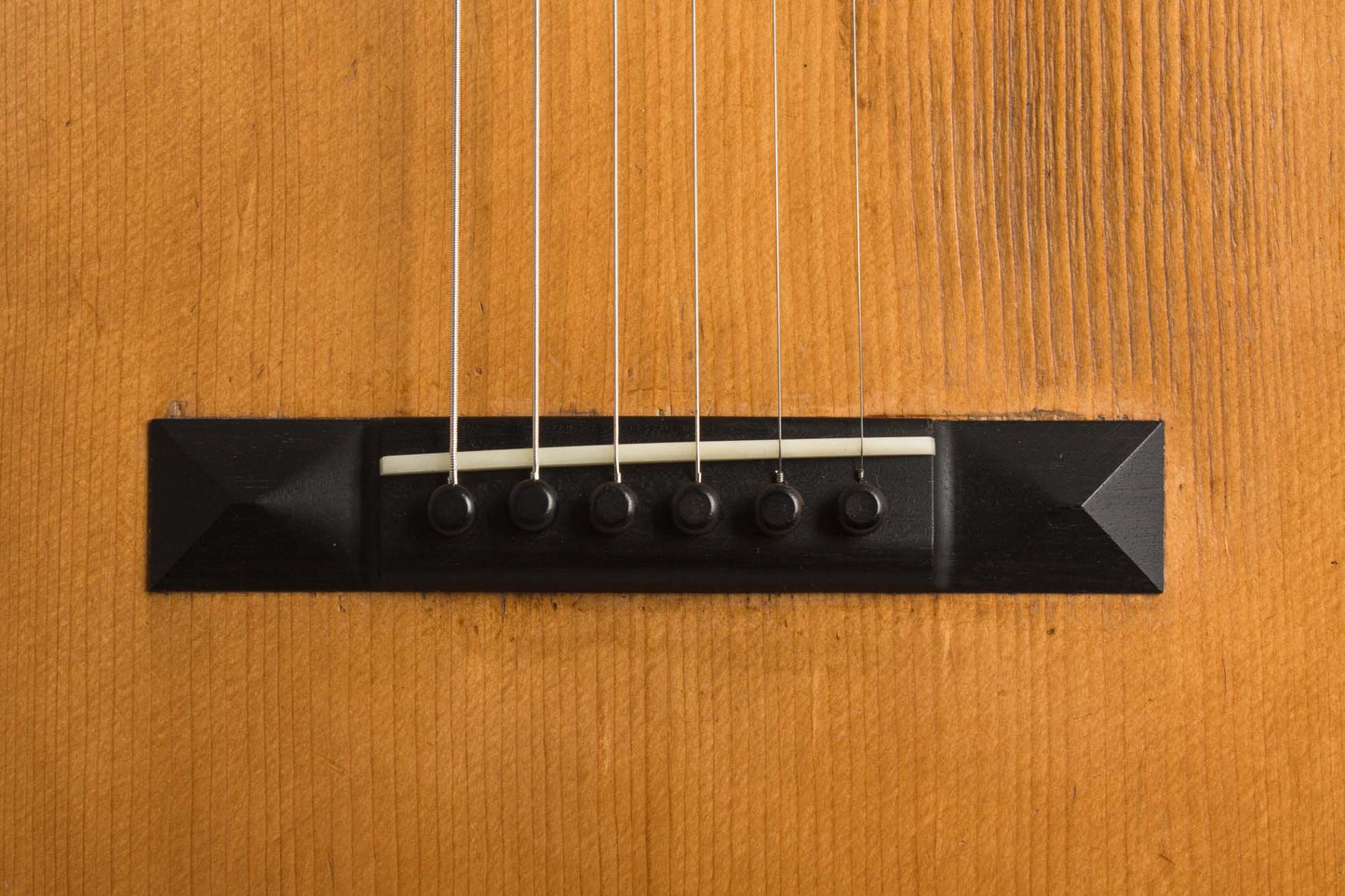
Generally the features of this instrument remain pretty much as they had been since the 19th century, with a small ebony pyramid bridge and 1 13/16" wide fingerboard on the neck which joins the body at the 12th fret. These guitars represent the final evolution of the original 19th Century Martin patterns before the "modern" 14-fret design became the standard just a few years later.
The 0-21 was the smallest and lowest-priced rosewood model in the company's line. Guitars beneath this were built with mahogany back and sides instead of the even-at-the-time costly Brazilian rosewood. It still uses the finest grade materials, to the same quality workmanship standards as the highest-grade instruments. The Brazilian rosewood on the back and sides has some very colorful if somewhat uneven graining, then considered by Martin as less desirable than the straight grain used on the top-line guitars. The straight-grained Appalachian spruce top is still lovely and even at the time premium wood. The famous Martin "herringbone" trim ornaments the backstrip and sound hole ring instead of around the top edge as with a Style 28; the outer binding is rosewood and the ornamental slotted diamond position markers in the ebony fingerboard are tiny and discreet.
This late 1928 0-21 is one of just 155 made that year priced at $55.00, which seems like a bargain even in period money. Even though produced in larger quantity than some of the highest grade models, this is still a relatively rare guitar. Late 1920s Brazilian rosewood Martins were made in very small numbers by later standards, and although the original price seems trivial today they were some of the most expensive flat-top guitars available at the time. This particularly featherweight 0-21 has seen some use and repair over nearly 100 years but remains wonderful playing and sounding instrument.
Overall length is 38 in. (96.5 cm.), 13 5/8 in. (34.6 cm.) wide at lower bout, and 4 1/4 in. (10.8 cm.) in depth at side, taken at the end block. Scale length is 24 3/4 in. (629 mm.). Width of nut is 1 13/16 in. (46 mm.).
This nearly century-old guitar remains in good playing condition for its age, with some noticeable wear and a number of mostly older repairs but nothing that affects its function or vintage character. The top has a very light overfinish/polish out that seems to have been done long ago as much of the wear is through it again. There are typical areas of pickwear through the finish below the strings behind the sound hole rim, and also below the fingerboard extension. The top has no cracks or repairs; there is some minor bellying behind the bridge and a more noticeable dip between the bridge and soundhole but the top is stable.
The back of the neck has a fairly scrubby ancient lacquer overfinish that is partially worn through again; there are some minor dings, dents and scrapes but no large areas of wear. The back and especially the sides of the body show some more noticeable finish work related to a number of old crack repairs. Several back cracks have been glued and cleated with different styles of cleat over the years. There is a jagged split to the back just off the center seam on the bass side directly below the heelblock with a long grain split descending from it; this has been reinforced with a long straight rosewood cleat. Several other straight grain splits on the back have been creatively cleated as well, the entire back finish appears to have been French polished as part of these repairs.
The sides show the most noticeable finish work, also related to an older repair. There is a very long crack repair running almost the full length the bass side from the forward curve above the heel almost to the endpin, on the lower bout in more than one spot. This has been internally reinforced with a large swath of bias tape. Although this does not extend to the treble side both sides have been French polished with a noticeable uneven effect around each waist; odd but that's how someone apparently did it some time ago. All of this finish work is light; there is none of the heavy sound-killing re/over finishing some older Martins endured!
The ebony pyramid bridge is a well-done repro, there are some minor scars around the base from the original pulling up. The original tiny maple bridgeplate remains intact, the amazingly slim original braces have not been altered and original diamond cleats sit underneath center seam. The center of the main X-brace was reglued and reinforced with bias tape, and the transverse brace was reglued. Several back braces have also been reglued.
The neck has been reset, The fingeboard was cut through at 13th fret as part of this process, a slightly odd spot to do that but not causing any issues. The original bar frets have been raised and trued showing no subsequent wear. The openback Waverly strip tuners remain original.
Despite the litany of repairs and finish anomalies playability is excellent and this is a very sweet sounding guitar with plenty of volume for a small-body instrument, with depth and articulation in perfect measure. It includes a more recent molded plastic HSC. Overall Very Good Condition.
View full details
The 12-fret Martins of the late 1920s are some of our very favorite guitars. For only a few years at the end of that decade -- just before Martin altered nearly all their designs to the 14-fret neck "Orchestra Model" pattern -- the company crafted a relatively small number of Brazilian rosewood-bodied flat-tops adapted to steel stringing instead of the gut used previously. This 0-21 is particularly light and very delicately braced; although we cannot say for sure what Matrtin's original intentions were, we recommend this particular guitar be played with silk and steel strings.
Generally the features of this instrument remain pretty much as they had been since the 19th century, with a small ebony pyramid bridge and 1 13/16" wide fingerboard on the neck which joins the body at the 12th fret. These guitars represent the final evolution of the original 19th Century Martin patterns before the "modern" 14-fret design became the standard just a few years later.
The 0-21 was the smallest and lowest-priced rosewood model in the company's line. Guitars beneath this were built with mahogany back and sides instead of the even-at-the-time costly Brazilian rosewood. It still uses the finest grade materials, to the same quality workmanship standards as the highest-grade instruments. The Brazilian rosewood on the back and sides has some very colorful if somewhat uneven graining, then considered by Martin as less desirable than the straight grain used on the top-line guitars. The straight-grained Appalachian spruce top is still lovely and even at the time premium wood. The famous Martin "herringbone" trim ornaments the backstrip and sound hole ring instead of around the top edge as with a Style 28; the outer binding is rosewood and the ornamental slotted diamond position markers in the ebony fingerboard are tiny and discreet.
This late 1928 0-21 is one of just 155 made that year priced at $55.00, which seems like a bargain even in period money. Even though produced in larger quantity than some of the highest grade models, this is still a relatively rare guitar. Late 1920s Brazilian rosewood Martins were made in very small numbers by later standards, and although the original price seems trivial today they were some of the most expensive flat-top guitars available at the time. This particularly featherweight 0-21 has seen some use and repair over nearly 100 years but remains wonderful playing and sounding instrument.
Overall length is 38 in. (96.5 cm.), 13 5/8 in. (34.6 cm.) wide at lower bout, and 4 1/4 in. (10.8 cm.) in depth at side, taken at the end block. Scale length is 24 3/4 in. (629 mm.). Width of nut is 1 13/16 in. (46 mm.).
This nearly century-old guitar remains in good playing condition for its age, with some noticeable wear and a number of mostly older repairs but nothing that affects its function or vintage character. The top has a very light overfinish/polish out that seems to have been done long ago as much of the wear is through it again. There are typical areas of pickwear through the finish below the strings behind the sound hole rim, and also below the fingerboard extension. The top has no cracks or repairs; there is some minor bellying behind the bridge and a more noticeable dip between the bridge and soundhole but the top is stable.
The back of the neck has a fairly scrubby ancient lacquer overfinish that is partially worn through again; there are some minor dings, dents and scrapes but no large areas of wear. The back and especially the sides of the body show some more noticeable finish work related to a number of old crack repairs. Several back cracks have been glued and cleated with different styles of cleat over the years. There is a jagged split to the back just off the center seam on the bass side directly below the heelblock with a long grain split descending from it; this has been reinforced with a long straight rosewood cleat. Several other straight grain splits on the back have been creatively cleated as well, the entire back finish appears to have been French polished as part of these repairs.
The sides show the most noticeable finish work, also related to an older repair. There is a very long crack repair running almost the full length the bass side from the forward curve above the heel almost to the endpin, on the lower bout in more than one spot. This has been internally reinforced with a large swath of bias tape. Although this does not extend to the treble side both sides have been French polished with a noticeable uneven effect around each waist; odd but that's how someone apparently did it some time ago. All of this finish work is light; there is none of the heavy sound-killing re/over finishing some older Martins endured!
The ebony pyramid bridge is a well-done repro, there are some minor scars around the base from the original pulling up. The original tiny maple bridgeplate remains intact, the amazingly slim original braces have not been altered and original diamond cleats sit underneath center seam. The center of the main X-brace was reglued and reinforced with bias tape, and the transverse brace was reglued. Several back braces have also been reglued.
The neck has been reset, The fingeboard was cut through at 13th fret as part of this process, a slightly odd spot to do that but not causing any issues. The original bar frets have been raised and trued showing no subsequent wear. The openback Waverly strip tuners remain original.
Despite the litany of repairs and finish anomalies playability is excellent and this is a very sweet sounding guitar with plenty of volume for a small-body instrument, with depth and articulation in perfect measure. It includes a more recent molded plastic HSC. Overall Very Good Condition.


Loading...
Just arrived!
Item #