Boss CE-1 Chorus Ensemble Model Chorus and Vibrato Effect, c. 1980, made in Japan, serial # 799927, grey crinkle enamel finish, aluminum.
In 1976, Roland's guitar effect offshoot company released the CE-1, a BBD chip based chorus and vibrato and a standalone version of the chorus circuit found within their recently released solid-state Roland Jazz Chorus amplifiers. The circuit was rehoused into the rather substantial chassis and rechristened the Chorus Ensemble. The functionality is fairly straightforward: two stomps (on for bypass, one toggling between the effects) and a few knobs to control the rate and frequency of the chorus or vibrato. With a mono or stereo output, the pedal doubles as an excellent addition to the studio if you'd rather not lug the somewhat cumbersomely sized unit onto the stage.
To this day, despite no shortage of digital recreations both mass-produced and boutique alike, few pedals have become as beloved as the CE-1; notably, compared to some of its modulation pedal predecessors like the Shin-ei Uni-Vibe, the widely produced CE-1 has also remained relatively reasonable priced despite the reverence so many have for the pedal. Fans of good music may recognize the CE-1's sound as a dead ringer for chorus master Johnny Marr's early riffage on songs like "How Soon Is Now?," though there is some dubiousness in interviews whether he used the pedal itself or simply the JC-120 bearing the same effect.
Height is 7 in. (17.8 cm.), 10 in. (25.4 cm.) width, and 2 1/2 in. (6.4 cm.) in depth at deepest point.
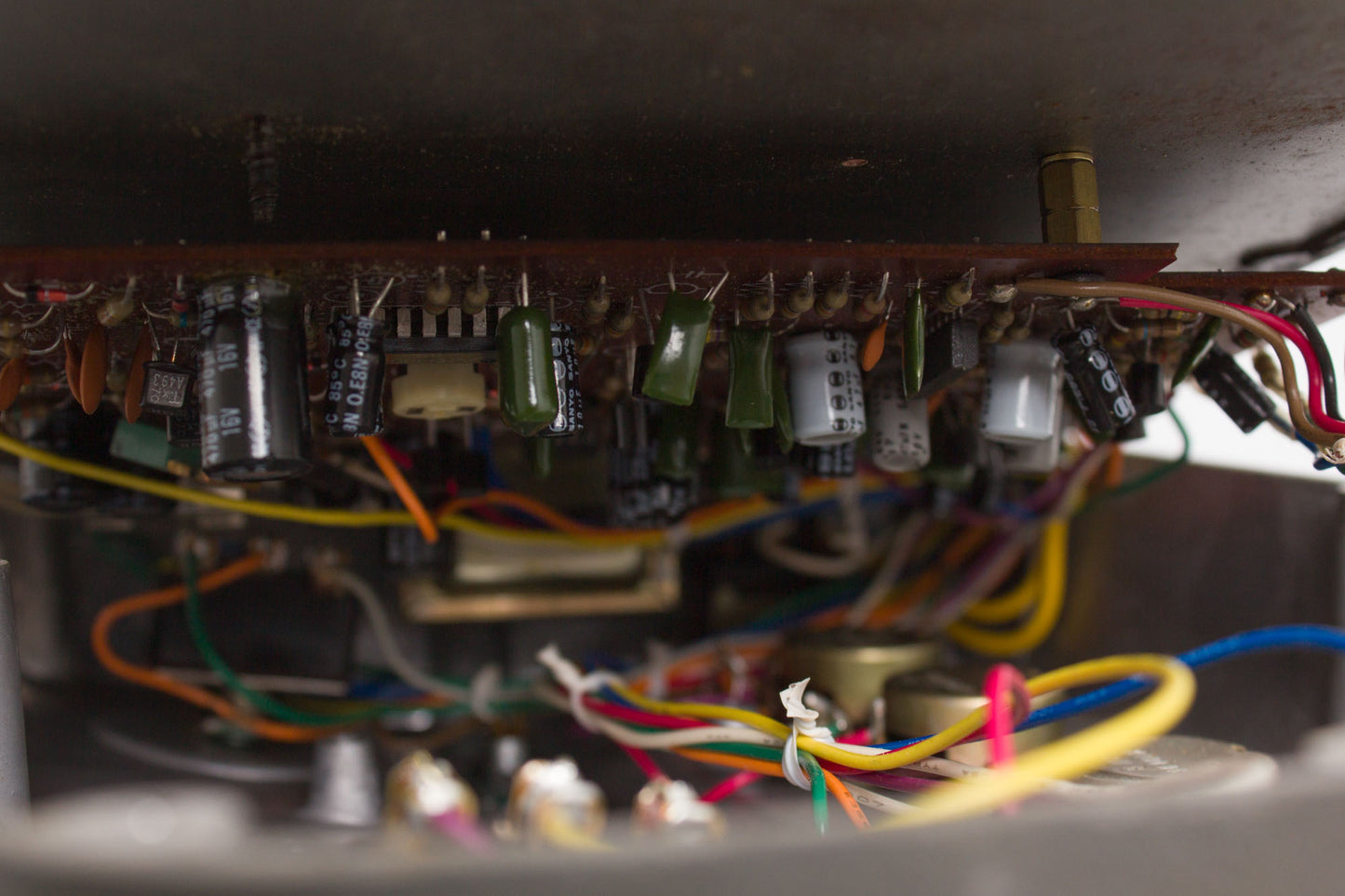
This CE-1 is in all-original condition and seemingly unserviced, judging from the original parts inside and the presence of the original ungrounded two-prong cable. The coveted Bucket Brigade components are still in tact and all is working as it should; the left side LED for "on/off" appears extremely dim, but there is no issue with the stomp itself or any facet of the circuit's functionality. The original hefty aluminum chassis is certainly in tact and would probably survive a truck collision; there is some minor cosmetic wear in the paint and discoloration in the faceplate. One should not necessarily expect the crystal studio clarity of a contemporary delay unit inspired by this pedal, but rather one should appreciate the lush, retro, and driveable sounds of one of Boss' earliest and often replicated classics. Generally Excellent - Condition.